A guide to road tripping in WEST AND SOUTH ICELAND IN 7 DAYS.
Get ready- this post is thorough. All about everything we squeezed into our seven days in Iceland, from landing in Reykjavik to flying out.
Warning: if you just want to know about food and accommodation click here – if you just want to know about activities click here or for general guidance here. If not, buckle up.
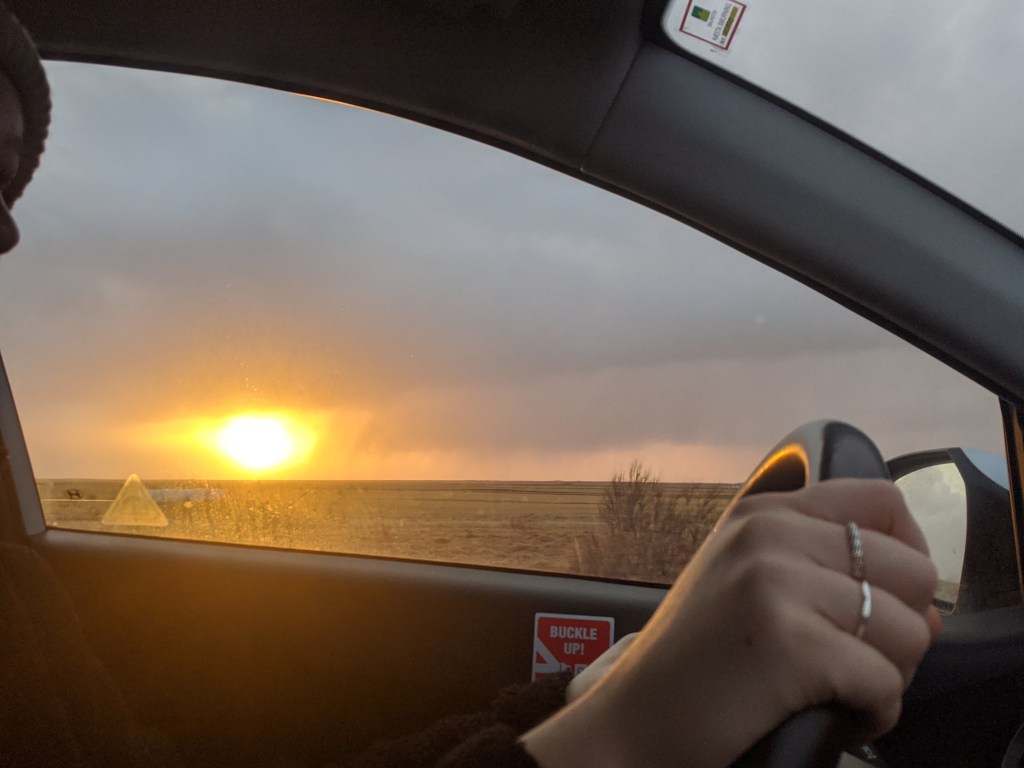
DAY 1:
Arrival in Iceland.
Our flight to the Reykjavik was at a reasonable time of day, which gave us time to wake up, overestimate how much time we had to chill, panic, run for the train to the airport (which we narrowly caught) and get to the terminal.
The flight was around two and a half hours from the North of England.
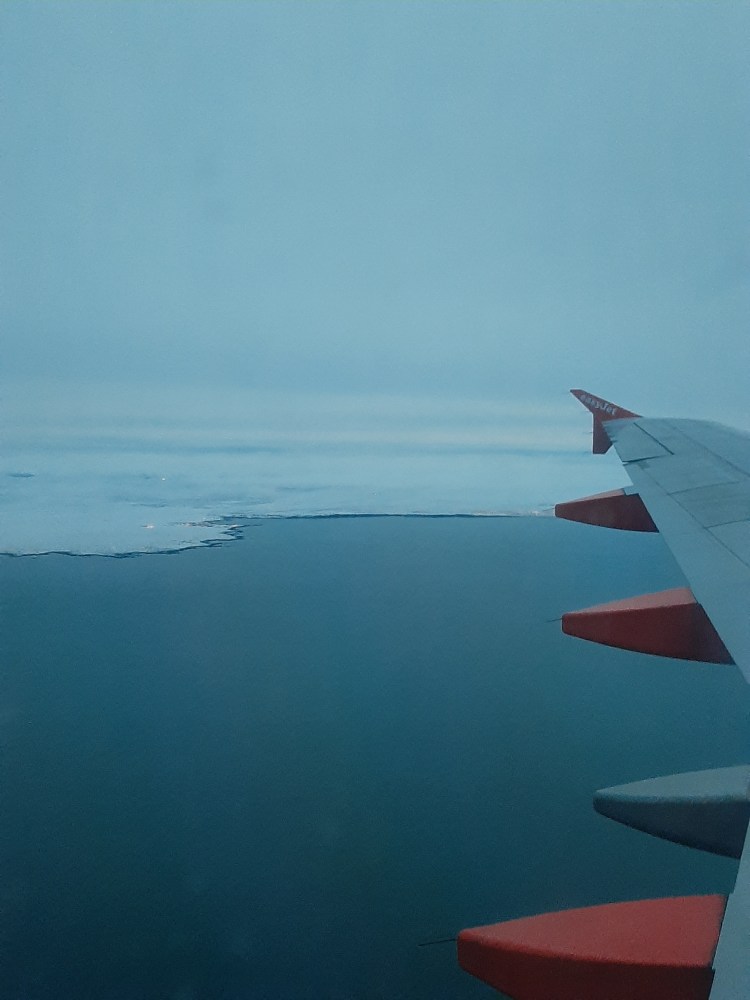
Then, we saw land… a sheet of white stuck out from the dark grey sea; it was around 5pm at this point and the long twilight had already begun. It was the time of night that the sun has gone but it’s not quite dark – the lights are on and everybody’s just got home kind of thing. So, the clusters of bright yellow lights were gathered by the coast, the mountains were visible amongst the clouds in the distance and our plane lowered and landed just after we passed the sea. We realised we had never landed on a runway in snow before.
Icelandic krona retrieved from the ATM, luggage off the conveyer belt, we followed instructions to find the shuttle bus that would take us to Icelandic Car Rental where we were to be met by our wheels for the week.
The suitcase wheels really went through it over the few minutes, as the walk to the shuttle was through deep snow. It was cold. We were immediately glad we’d gone to the effort before arriving to get gloves made of a less absorbent material than wool or cotton.
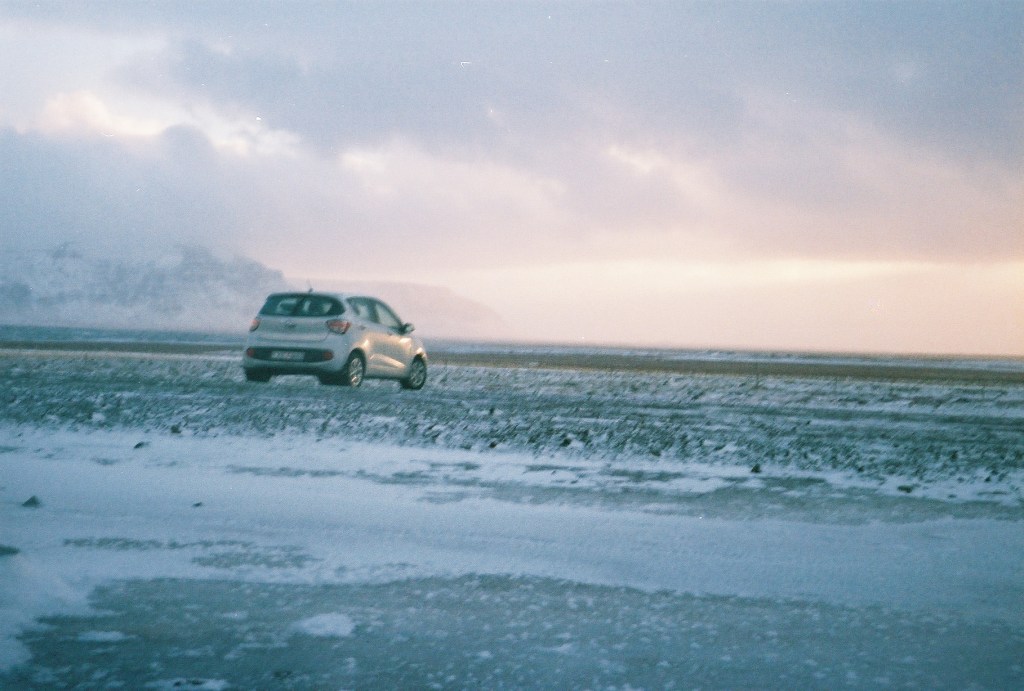
The shuttle bus took maybe ten minutes, then we were picking up our car. We were greeted by a lovely Icelandic lady who told us what is perhaps a scripted warning, about how tourists don’t treat these cars with respect- driving them into the sea etc., really not taking weather warnings seriously. We added extra insurance to our package and took the keys. The lady also told us there was a storm brewing and that we should really take note of the road.is warnings in the coming days. We took note and got in the car. It was small, sturdy and armed with winter tyres (which we would end up having a lot of faith in); a little silver Hyundai I20 that we fell in love with as a result of the nail-biting experiences it got us through.
The car was the opposite of what we were used to in the UK. The side the steering wheel was on, the gear-stick, the wipers, the cars on the road. We got out some of the snacks out we’d brought in our hold luggage (knowing how expensive Iceland is supposed to be compared to the UK!) and tentatively set off.
Google Maps led us on the 50 minute drive to Bus Hostel. The motorways lit from the floor and clear of snow although it was piled up on the sides of the roads. Once we got to grips with the fact the slow lane was on the right, not the left, practised general spatial awareness with the car and understood the simple signs, we were really fine- the weather was pretty timid this night… little did we know.
By the time we arrived, it was 8.30pm. We hatched a plan for the coming days, plotting daily routes into Google maps and saving them to the home screen, just in case one day we lost internet out in the middle of nowhere- the saved routes would still be picked up by GPS!
We had a wander into Reykjavik and noted that there were a lot of natural growing ‘Christmas trees’ surrounded by snow (speaking of Christmas- despite it being late January, a lot of places still had Christmas decorations on display! Whether this is a ‘thing’ or not, we never quite discovered). The walk to the city took about 20 minutes. The houses en route were boxy and the streets were quiet and clean, everything looked quite minimalistic and aesthetically pleasing. Simple, cosy and inviting, which is what you want given that the temperature outside fluctuated between -2 and 8 degrees Celsius over the course our week there!
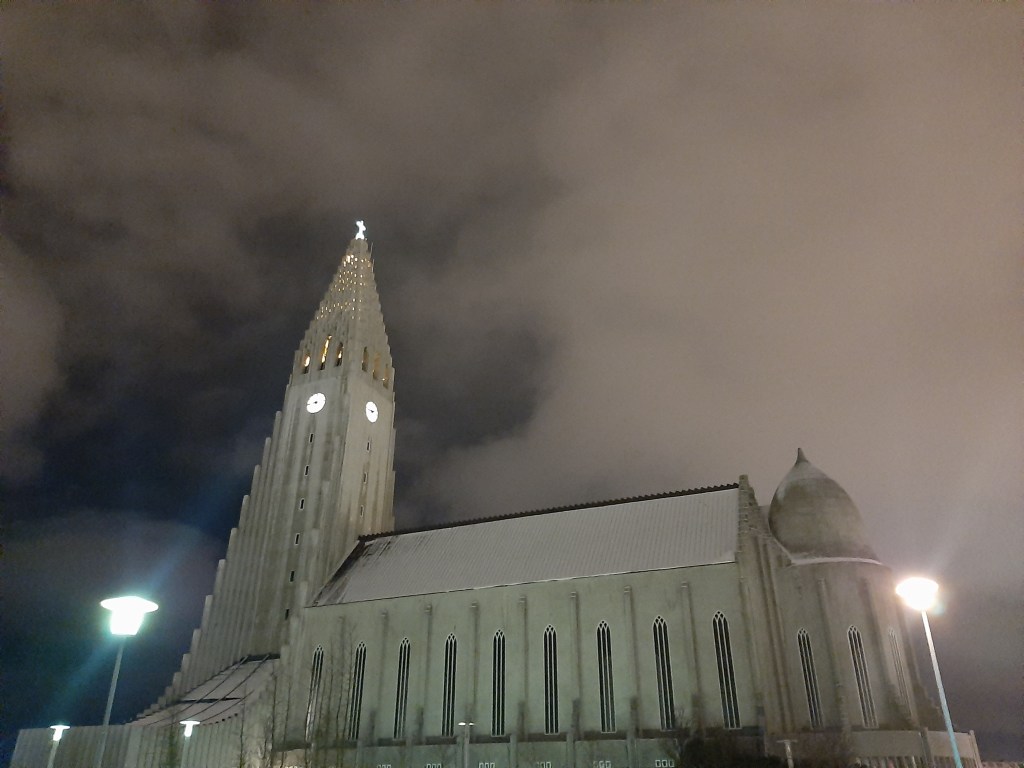
We explored some of the shops, noticed that quite a few things were Thor themed, and generally Viking themed. We saw Hallgrimskirkja Cathedral on our way into the city, which was symmetrical and played music as we wandered by- reminiscent of basalt columns in its architecture, it stood out against the night sky.
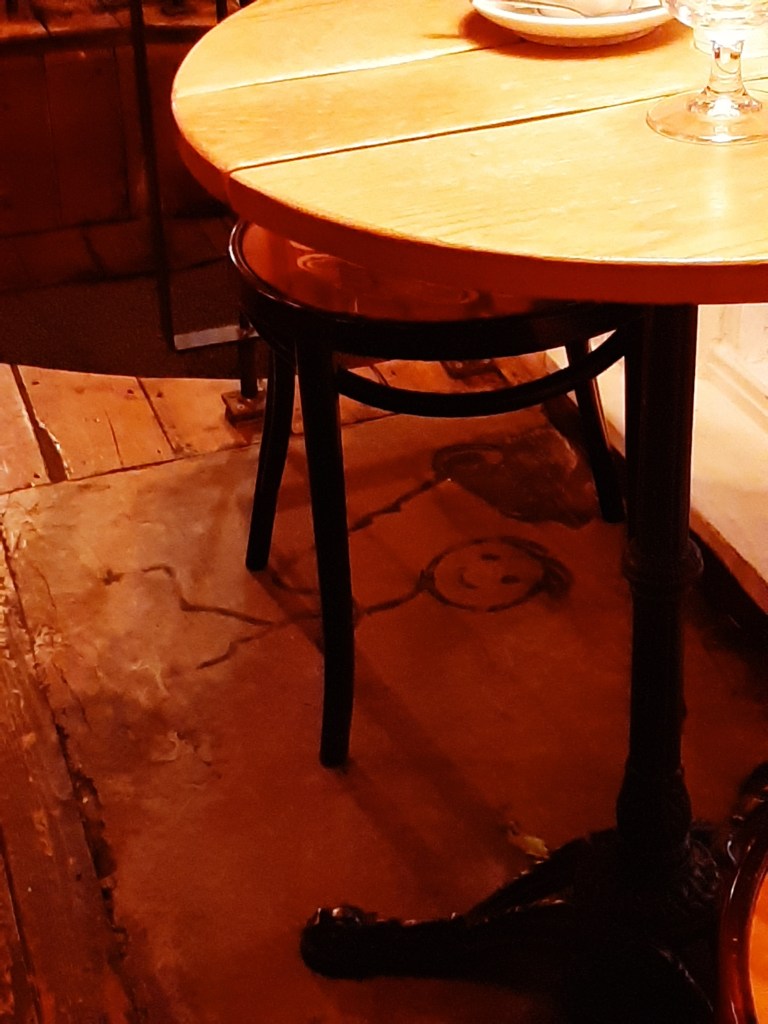
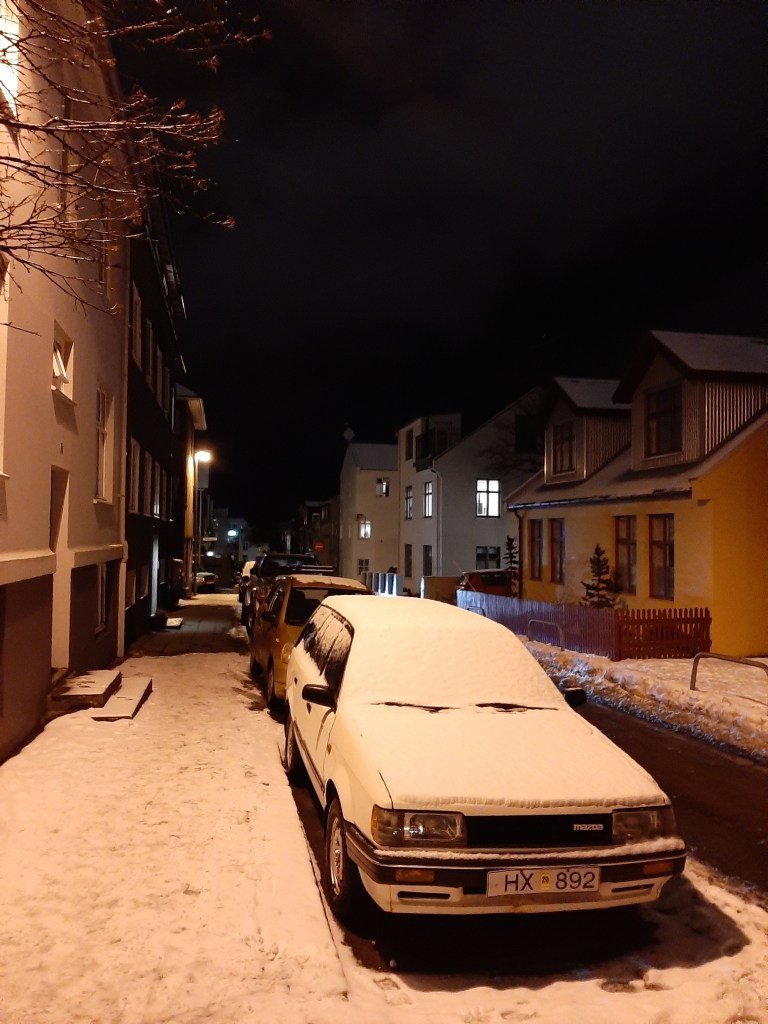
Eventually, after plenty of wandering and an emergency stop at the corner shop for drinks, we settled on a detached little house-come cosy cafe Kaffibrennslan, full of locals playing card games and drinking beer.
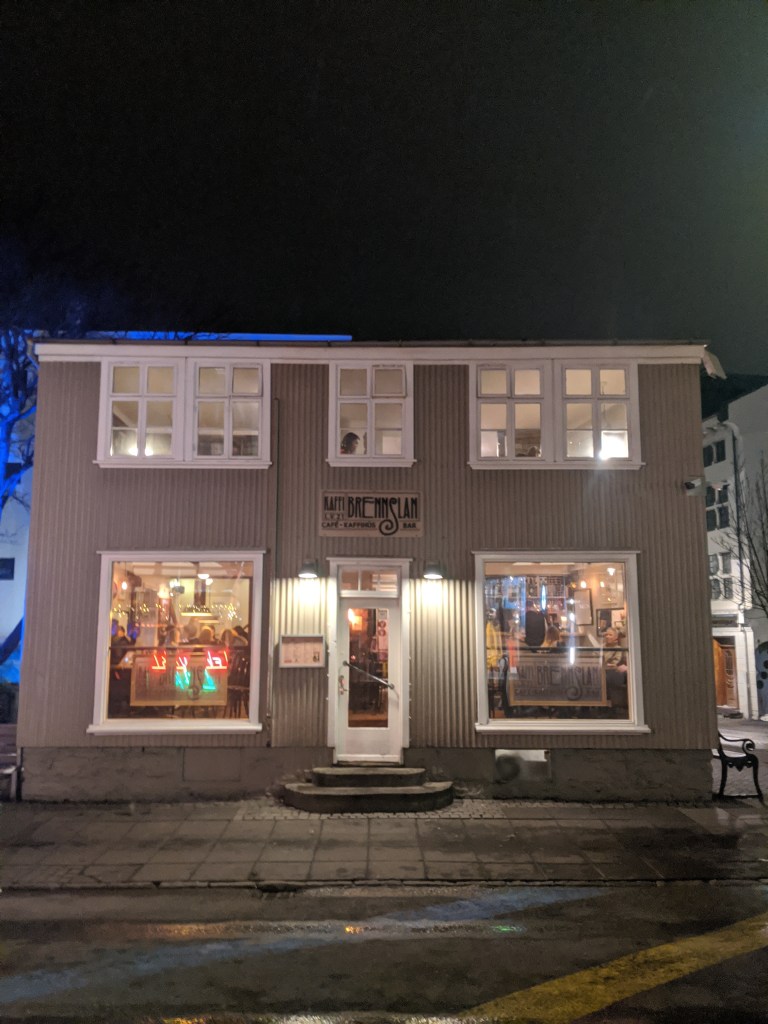
Following this, we wandered back to get some sleep. Our road trip started early next morning, but we’d be back in Reykjavik to explore properly towards the end of the week!
DAY 2:
Setting off into nature.
Wind. That was the first thing we noticed, or rather the first thing that slapped us in the face as we stepped out the door of the hostel on the first day of our adventure.
We were headed North from the city. There are very few roads you can actually choose between if you aren’t in an off-road vehicle. There are just a few main roads that get you where you’re going so it’s difficult to get lost and the views at every second are beyond breathtaking. Just double check that a route you’re planning isn’t set to take you off road if you aren’t equipped for that. (Read more extensively about our driving advice here!)
We were ready to go by 10 am, by which time, of course the twilight hue in the sky had returned but the sun had not yet risen. It was biting cold and if you didn’t hold onto the car door, you’d lose it. But we set off, almost driving on the wrong side of the road out of pure habit. The roads were stunning and the sun rise lasted for hours- a pink hue seemed to remain in the sky regardless of the time of day, most days.
The first leg of this drive was lengthy and mountain encompassed. The scenery was dramatic and the roads pretty baron. We put our music on and drove carefully, in wonder at everything we passed. It really felt almost instantly like it was our little car against nature. And nature looked pretty intimidating to say the least. We had all the luxuries of being in a cosy house; heated seats, snacks… but you did think, if it was you and this landscape for even a few hours, the landscape would win hands down.
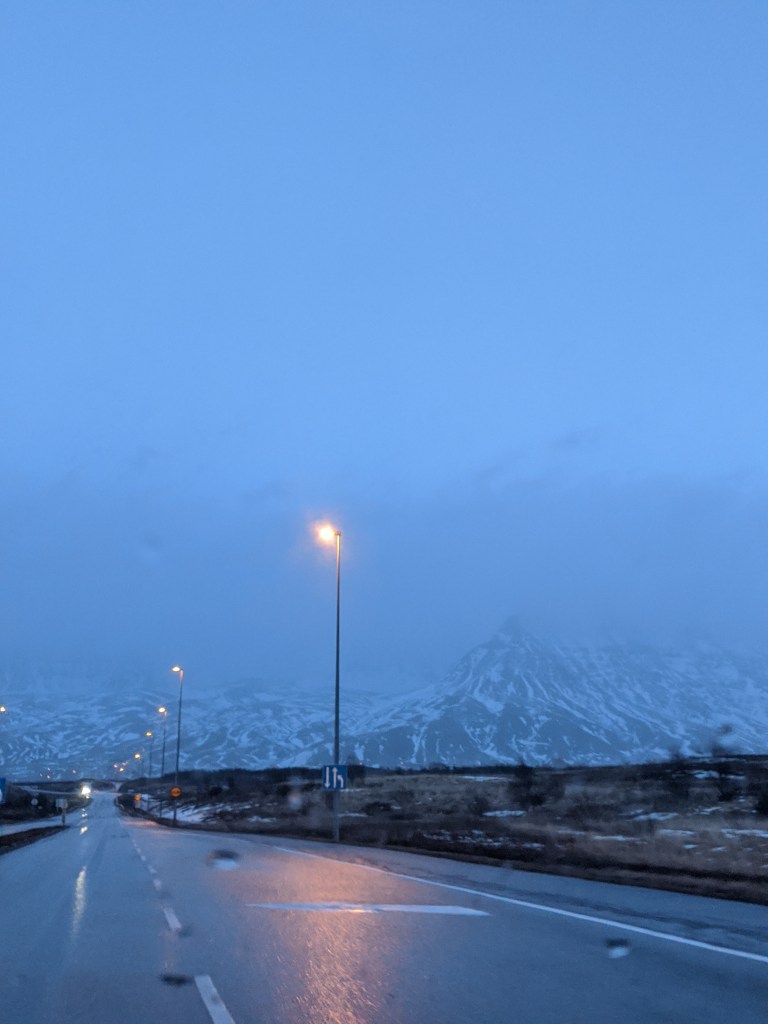
The roads were clear of snow and ice, which was a good job considering how inexperienced we were at this stage. But when you got to a flat bit of land with no mountains for shelter, boy did you feel the wind in that little car. It was manageable for sure but we remained cautious always.
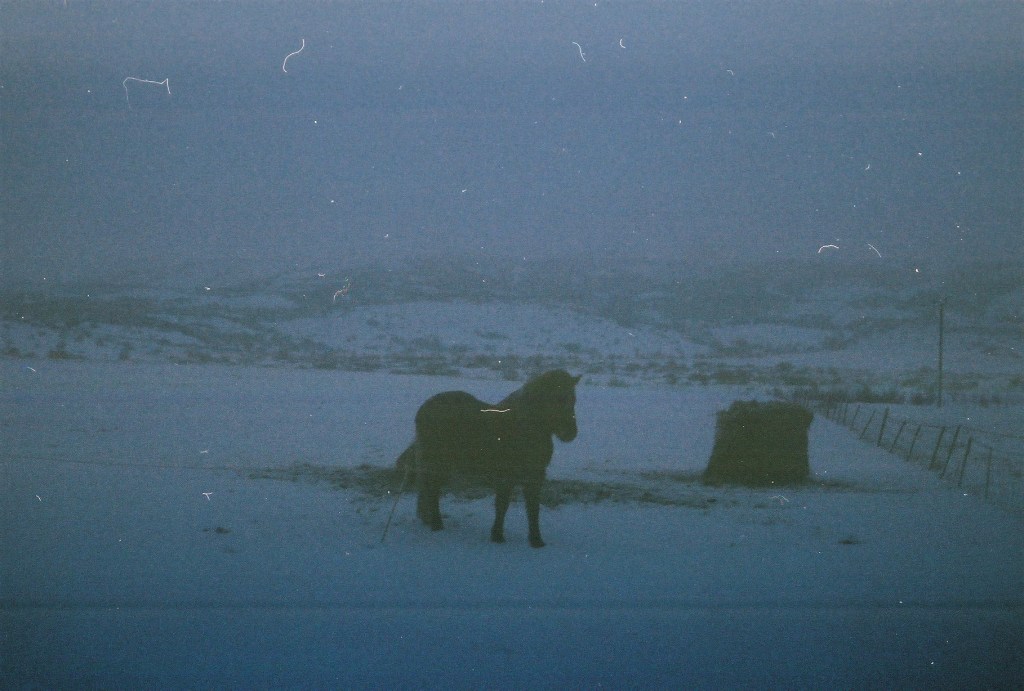
But for the occasional Bird of Prey, or Icelandic (extra fluffy) horses in the distance, or a much more road-suitable car overtaking us every now and then, it was just us and the open road. We went through a tunnel under the sea and a bridge over the sea (it was ROUGH and we decided we were glad we were in a car rather than a longboat!), we stopped at a Bonus supermarket on the coast and had our first taste of Mondlukaka which tasted like some kind of Bakewell Tart cake- it became our unhealthy staple.
Eventually, we arrived at our first stop Ytri Tunga, which was a nice stretch of sandy beach covered in patches of ice and snow, which felt odd. There are usually seals chilling (literally!) on this beach but after reading the information board we basically discovered that no amount of blubber could make even the craziest of seal come and freeze on the West Coast of Iceland in January, and they really were there in any other month. Nonetheless, the beach was beautiful and the sea looked like an angry beast. We chose not to take a dip and after stretching our legs and trying our best to stay upright, we swapped drivers and headed onto our next stop- always conscious of early sunset and how driving here at night would be far worse than rushing a little in the day.
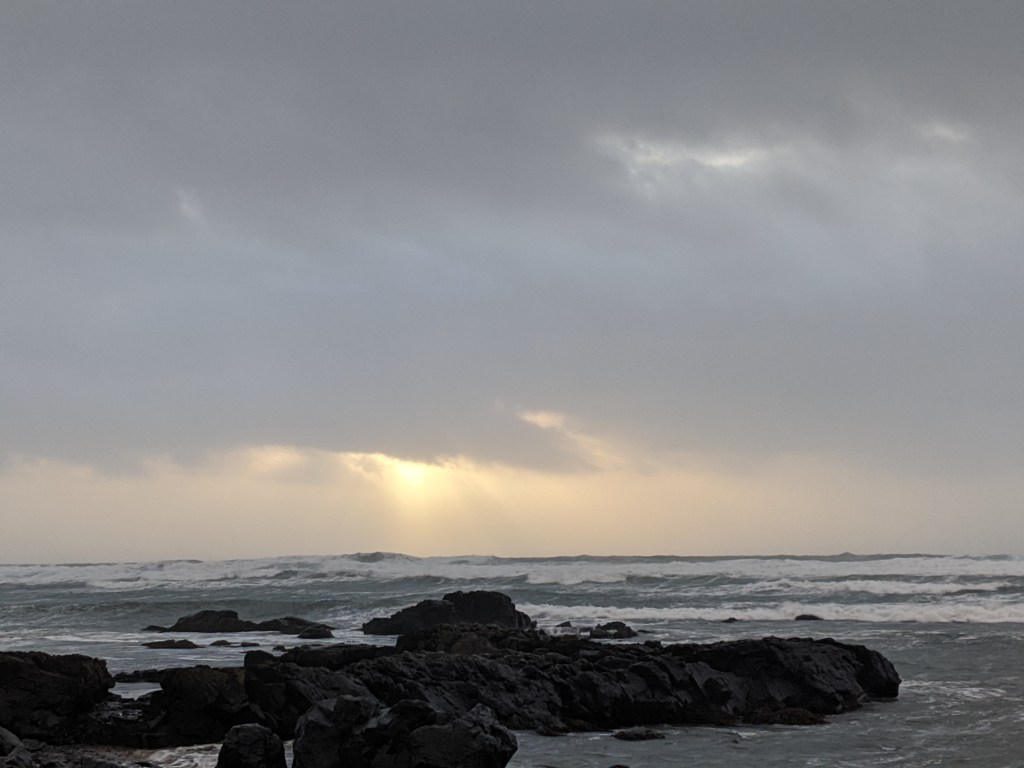
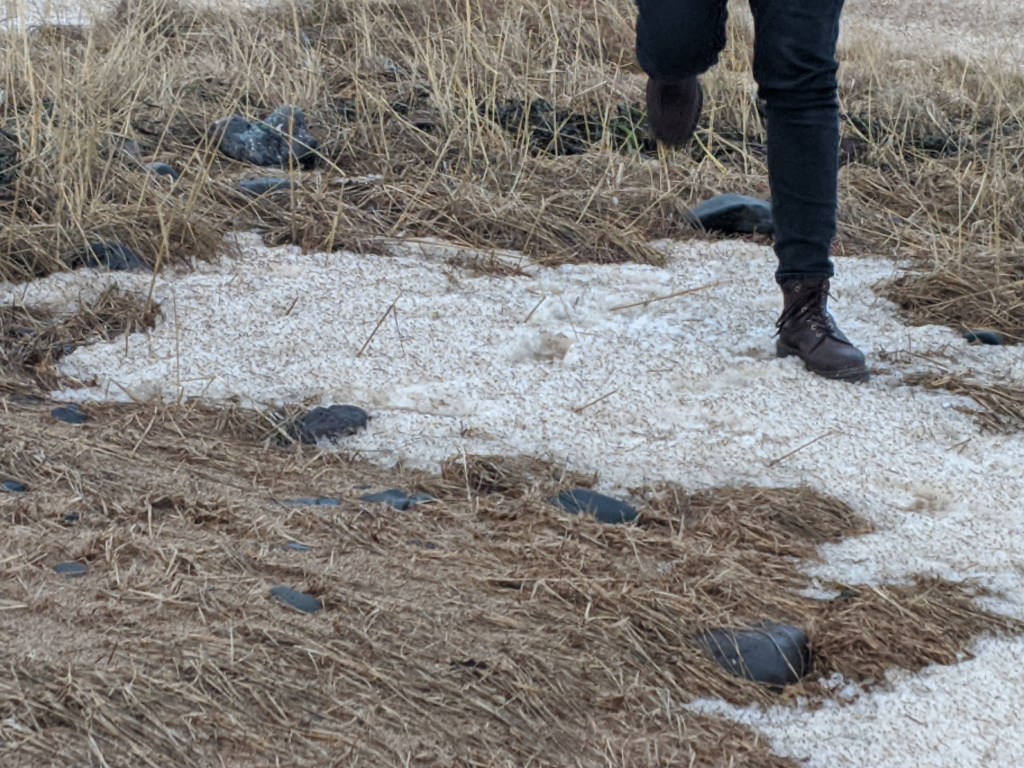
Next, after a wrong turn up a mountain and a questionable 3-point-turn, we had made it into Snaefellsnes Peninsula region, which felt like an achievement.
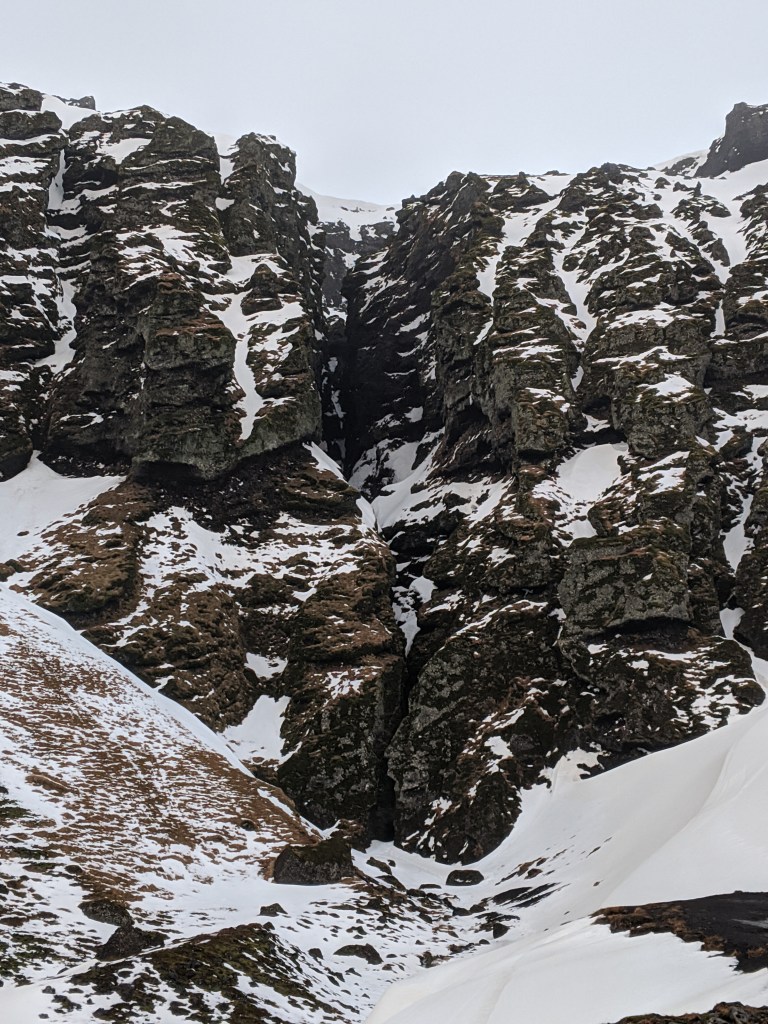
Our next stop today was Raudfeldsgja Ravine. Now, on our journey that morning, we’d read a lot of folk lore to pass the time. All about the myths and legends; the trolls that had frozen into rocks when they’d been caught in the sunlight out to sea, the elves that lived deep in the mountains (as recently as 2013 roadworks were stopped when workers succumbed to the protesters insisting ‘DO NOT DISTURB THE ELVES.’ (read more here) Depending how you feel about such things, this may sound pretty crazy but honestly, Iceland has a feel all of its own that makes one feel like creatures really may exist in the places no human could realistically reach- in the spaces between the mountains or in the hollows beneath. (We both love Lord of the Rings so we were fully on board with this).
The point is, this particular Ravine was cloaked in such history- with a whole tale about two brothers who killed their sister and their father threw one of the brothers, Raudfeldsgja, into this ravine. In the clearing we almost were genuinely blown over. There was evidence in the form of boot prints that people clearly ventured into the ravine, but the snow was knee-deep in places and the sunlight was waning slightly, so after walking up the path, marked out by piles of stones, a fair way- we got back in the car. The ravine was like a huge crack in the mountain that looked like only Thor himself could have created with thunder.
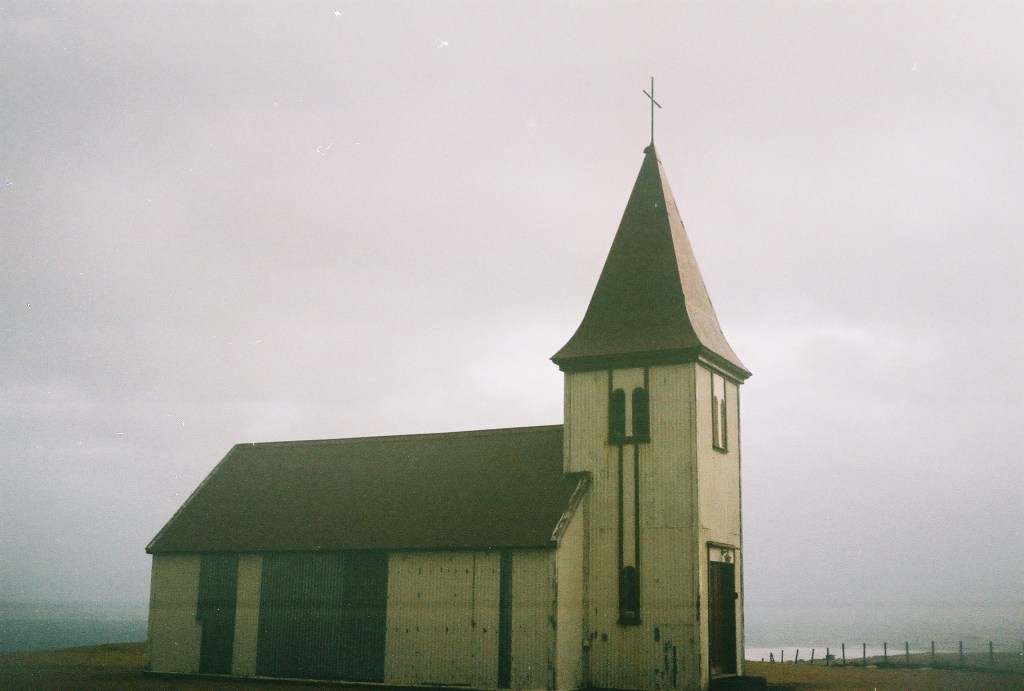
After warming up our fingertips in the car heaters, we headed to our next stop: Hellnar. (We missed Budir, the black church simply due to a missed turning- but it’s along this road, so if you do a similar route make sure you stop there too!). Hellnar was magnificent; it was in amongst a little village of identical houses- we wondered how people lived in such a remote and weathered region but we could see the appeal purely with the views. Behind the lonely church was the sea crashing against the rocks, and in front was the village, towered over by the snowy mountains of this national park. Everything man-made looked so tiny yet so well-built and so aesthetically pleasing. If you’ve ever seen a Wes Anderson movie- picture that. The gate entering the church grounds was broken (presumably by the storms) and the church was tiny, but in every village we visited the churches stood alone which gave them an air of significance greater than any other building anywhere. They were by no means fancy or over-the-top, but unique and full of purpose. After taking some photographs and peering in the window and spotting very little, we went troll-hunting (only for the frozen ones).
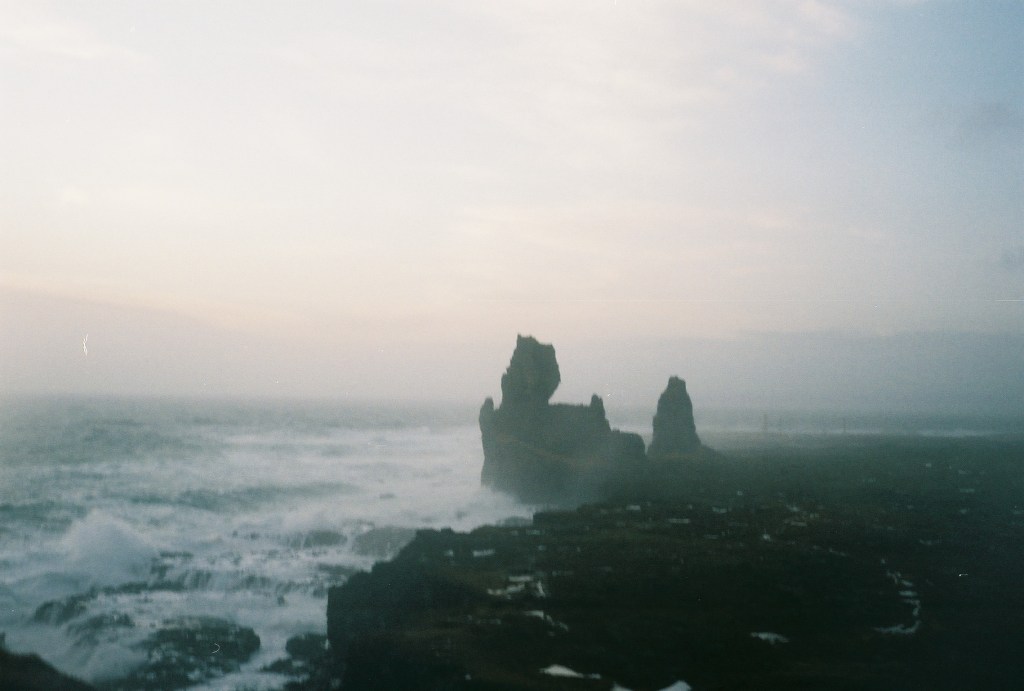
Raudsfeldgja Cliffs were majestic in themselves but when paired with the tales we’d read, they were truly something else. We were kept on the coastal path by railings. The winds were up to 60 km p/hr and we kind of got the heeby jeebies stood up there, knowing the chances of survival if we were blown off were at absolute zero. The sea seemed angry in a way we’d never seen before- it looked threatening and menacing in this storm and the trolls that ventured out there in the first place must have been pretty brave. After taking in the wonder, we had nearly geographically reached the top of the nubbin that was our route around Snaefellsnes and we carried on to the little town of Hellisandur, the biggest town we’d see all day.
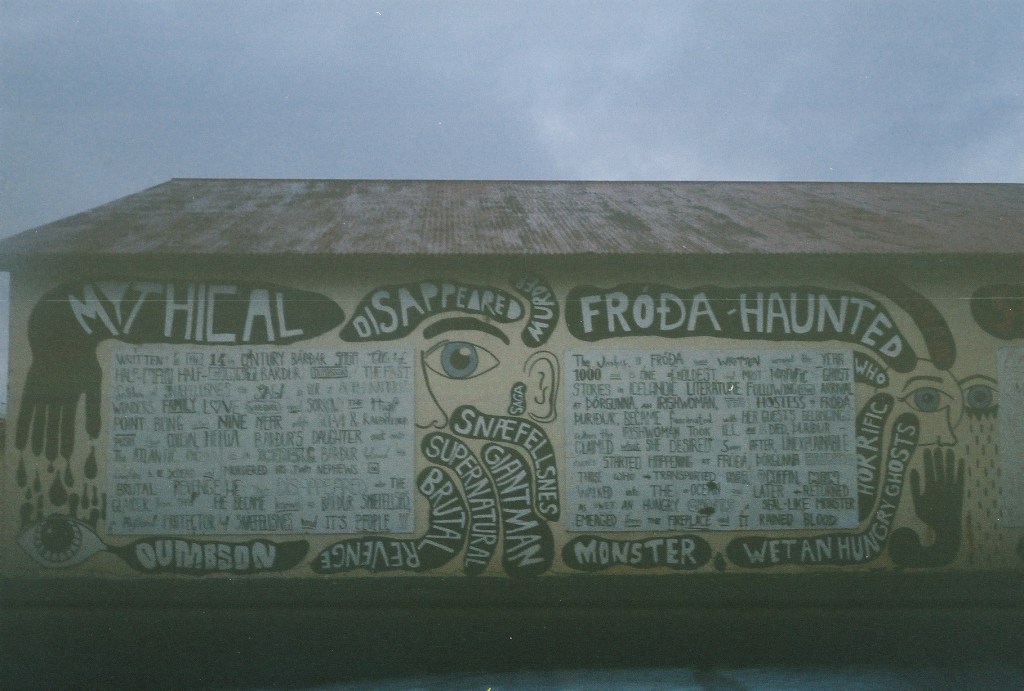
In Hellisandur, we saw kids playing in the streets in the cold and wondered how it must be to be a kid in such a remote area. Pretty cool, we decided. We parked in a public car park and went for a walk. We came across an area of wall art that surrounded a sheet of thick ice. We read each tale; about ghosts, ghouls, Vikings, serial killers. You could hear the sea crashing in the background. After this unique story time, we wandered around town and spotted a Viking ship sculpture, Christmas trees being grown under shelters and more beautiful graffiti as well as a parked-up fishing boat. It was hard to believe the conditions were ever safe enough for that fishing boat to ever be used by anyone. We then drove to the church a bit further down the road, which we later found out was called Ingjaldsholl– it was completely surrounded by mountains and fields and down a long straight road from the main road. A little pilgrimage on foot. At the church were stones, carved into which were a man and a woman, guarding.
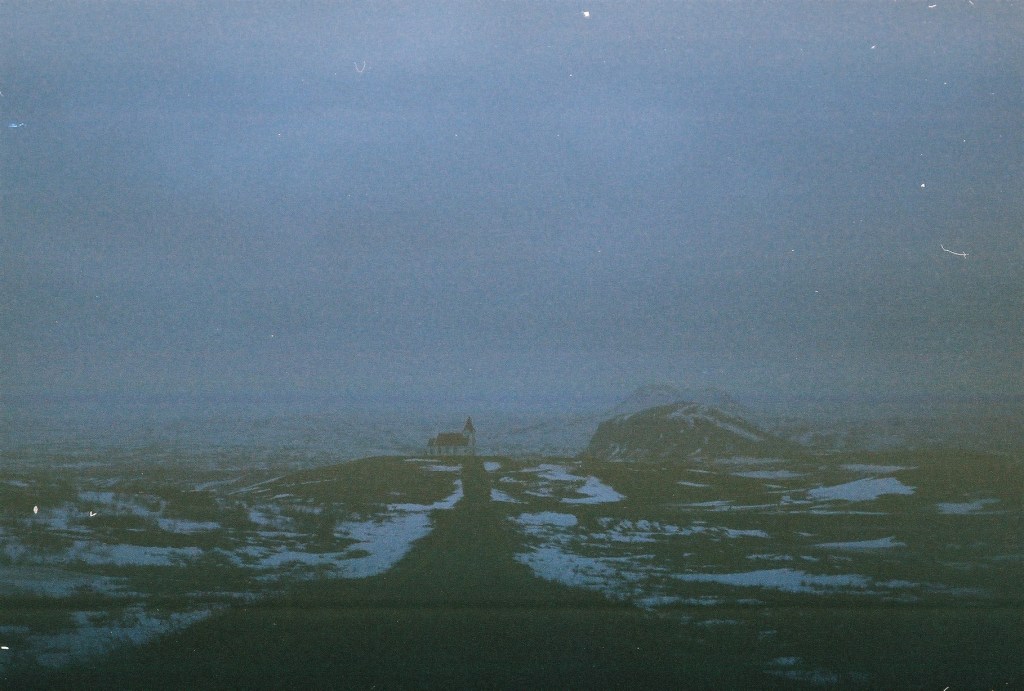
As you can see from the pictures, it was very nearly dark by the time we were done exploring these unique places, but luckily we weren’t far from our accommodation by now. This was in Olafsvik, and our property Biker’s Paradise was perched, quite literally, on a sort of cliff-edge up a hill overlooking the sea. It was stunning but so windy, part of us didn’t believe the car wouldn’t have blown away by morning.
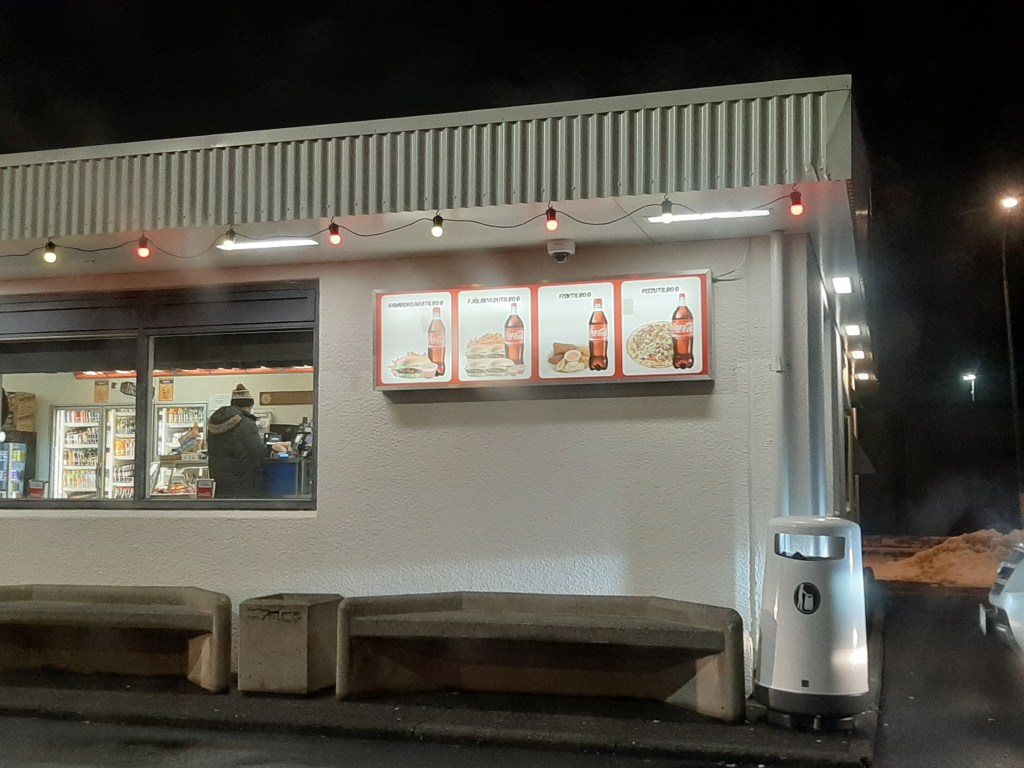
Olafsvik was a lovely town. The conditions were worsening and overnight it threw it down with rain, hail, snow- sometimes horizontal, sometimes vertical. That evening, we’d decided we deserved a nice meal after eating shop-bought food all day, so we headed to the local restaurant (one of two) Sker and both tried fish dishes, considering we were right by the sea- it was delicious. And it was chucking it down outside. We noted a petrol station that we’d use the following morning, where we bought some supplies for the evening and headed back to our rooms. We decided to watch Bokeh– a movie set in Iceland and it wasn’t the most uplifting film to say the least, but it gave us a glimpse of the days to come scenery-wise at least.
DAY 3:
Into the National Park.
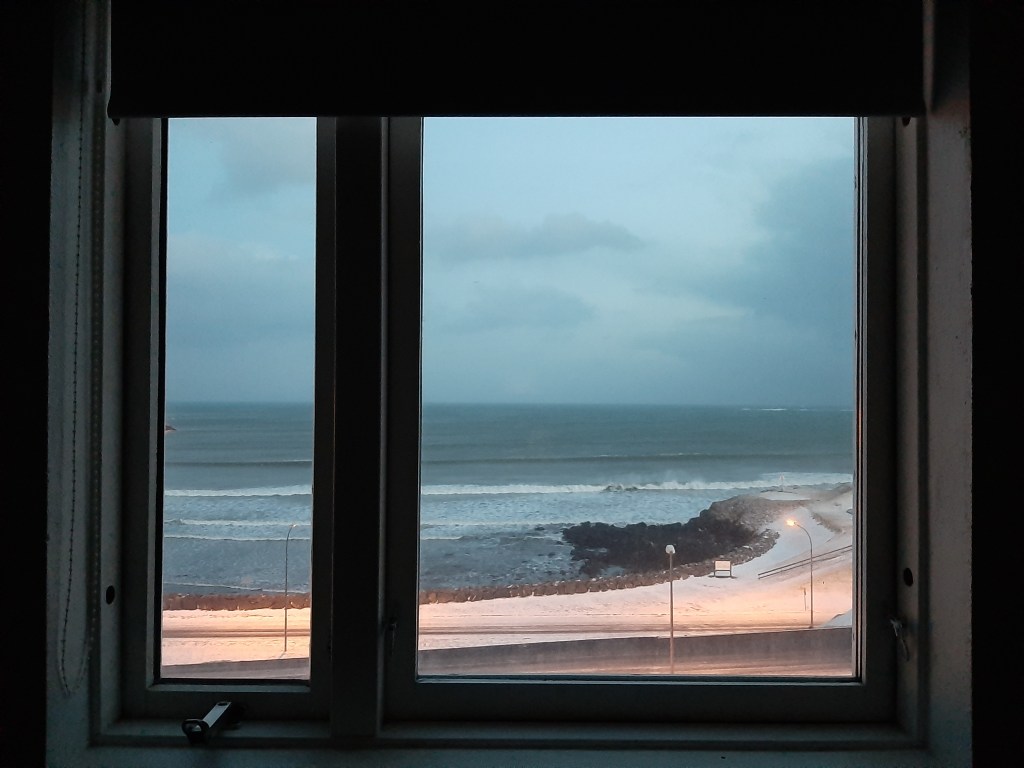
We woke up around 9.30 am and it was still very dark out. Out the window we could see that the roads were snow covered and the wind had picked up, if anything. We read warnings on our phones from the weather but generally brushed them off (*not advisable!*) because we were on a time limit but noted that we should be extra cautious. We had a lot of ground to cover if we were get to our accommodation in Thingvellir National Park, far away from the nubbin of Snaefellsnes, by this evening. Our car was where we’d parked it, much to our relief, and we got in and headed down the hill we’d been perched on after saying goodbye to our lovely hosts. The roads were in a worse state than we’d experienced up to now. They were icey and the wind was still strong. Thank God for winter tyres.
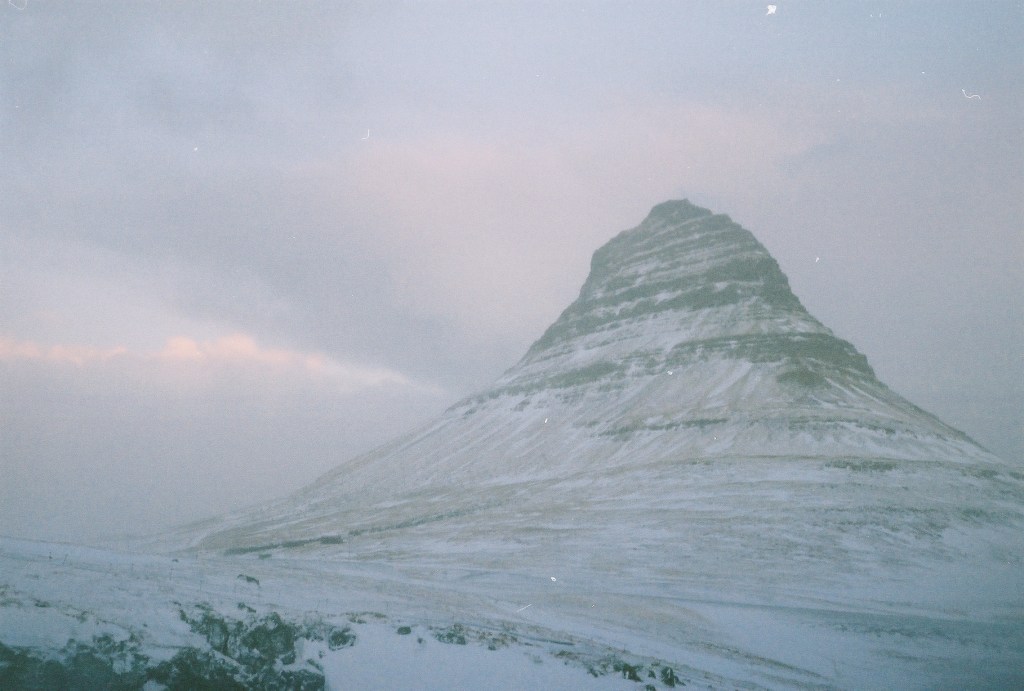
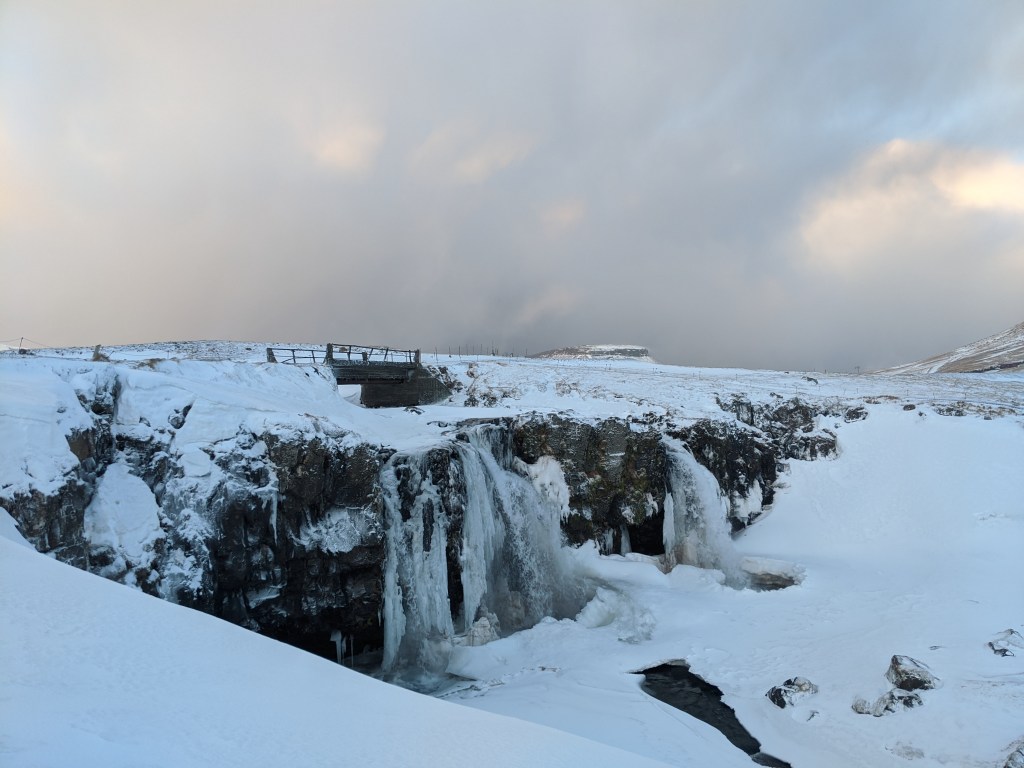
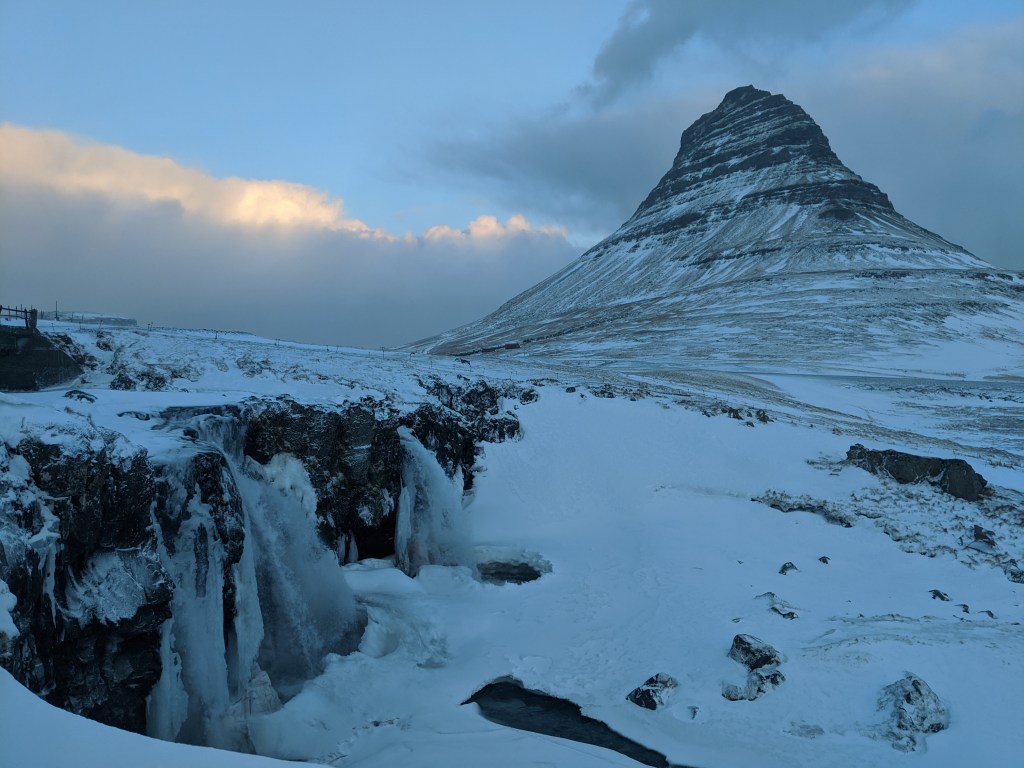
Our first stop today was Kirkjufell viewpoint and it was absolutely unreal. We drove across bridges, keeping two hands on the wheel, particularly in clearing as that’s where the wind was strongest. As we approached the mountain, from behind it had a flat-top, which was odd but as we got round to the front, near the waterfalls we turned off and saw the waterfalls with the pointy mountain as a back drop. We were in what could only be described as a whippy-blizzard. It was just us and some tourists with what I can only assume was a very heavy tripod. We took it all in. The sun was still rising so slowly and the cloud cover and weather conditions were changing by the moment. The ground was snow-covered and the waterfalls themselves looked like they’d broken ice to flow. It was breathtaking. A real must-see. One of those things that looks even more incredible in real life!
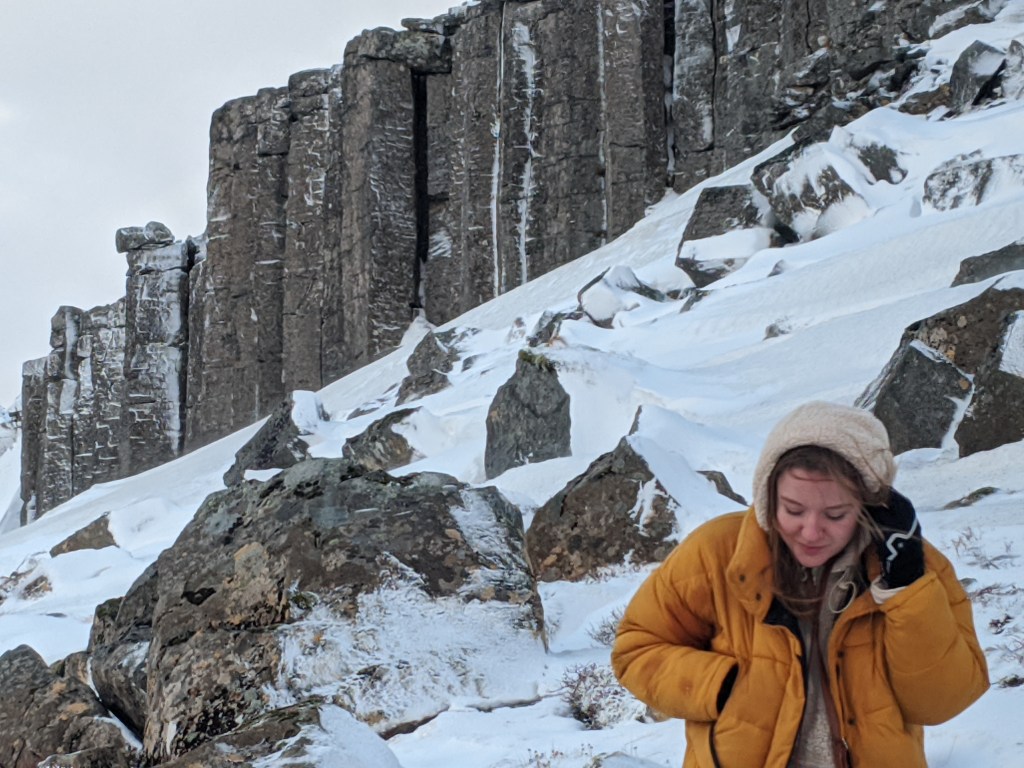
Our next stop on day three was to see the Basalt Columns: Gerduberg Cliffs– something we’d seen once on some wanderlust Instagram account and had always kept in mind. Basalt columns are fracture patterns created when lava cools, often forming hexagonal shapes. When we arrived at Gerduberg Cliffs, we were the only people there and the sky looked unbelievable with storm clouds coming and going overhead. The cliffs were towering over us and the car, parked, looked like it was in an ad. We ventured over ice and through snow to get a closer look at the cliffs, which looked shorter than they really are because the bottom section of the pillars was covered in snow a few metres deep.
Time was pushing on and after spotting Erdberg Crater from a distance we continued on because we knew even if we’d gotten closer, we wouldn’t have had the time to walk up to it anyway- but if you do have time on your journey, it’s on this route!
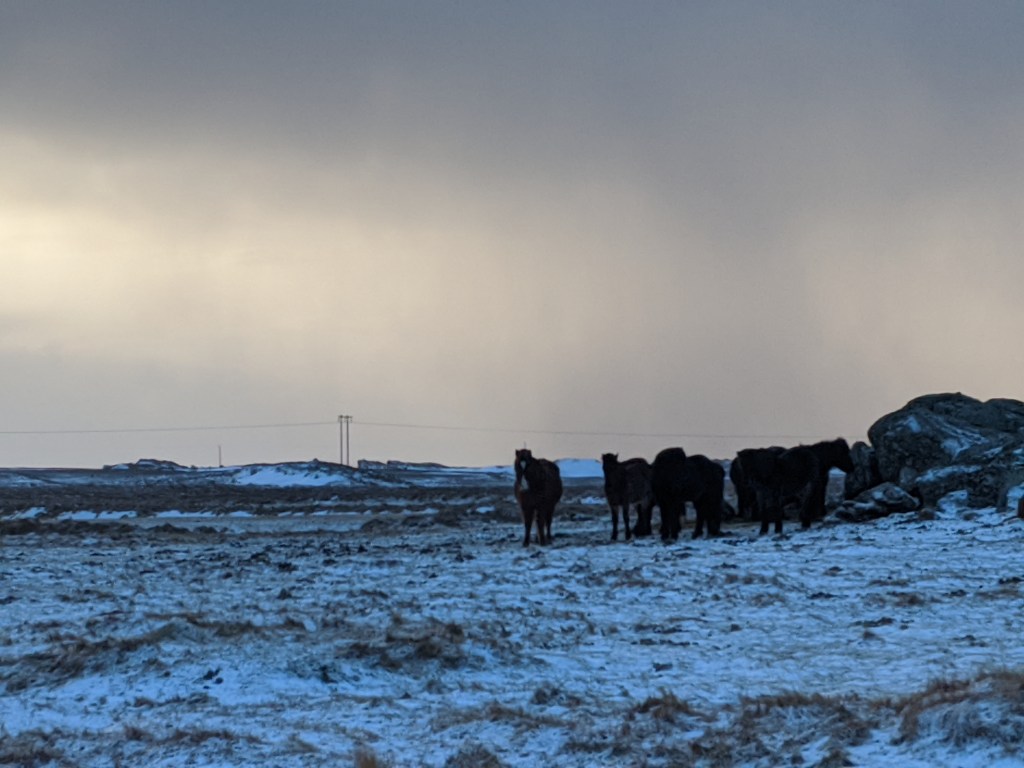
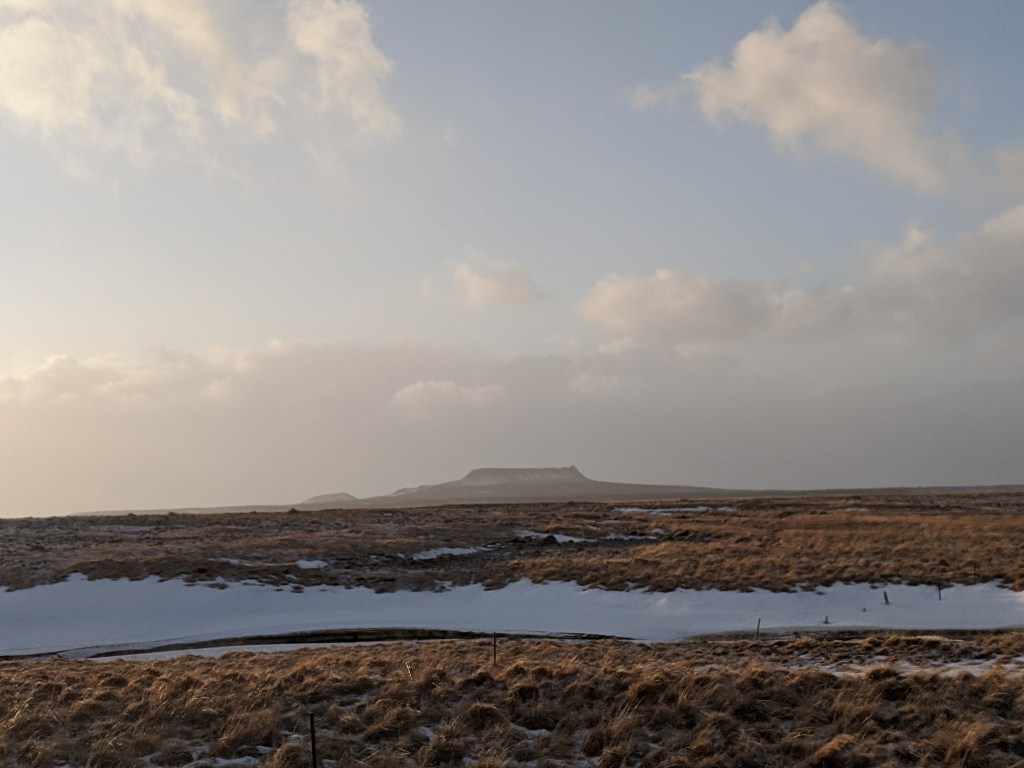
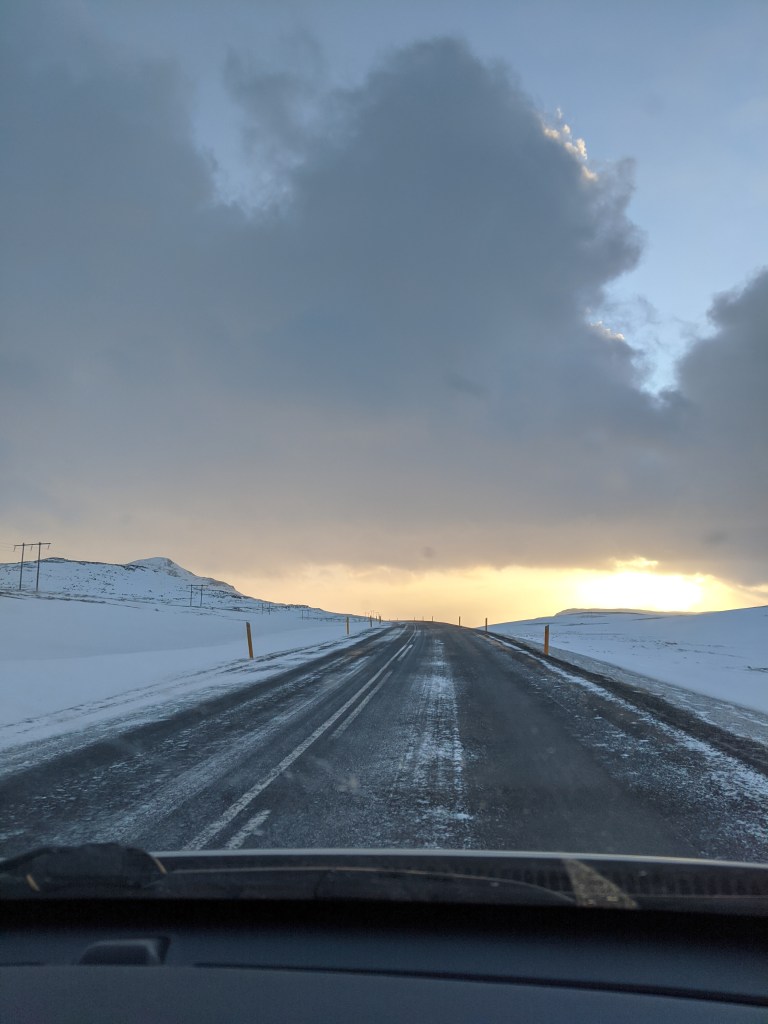
The road conditions had worsened but the sights out the car windows were unreal. We saw volcanic rock scattered over snow and we saw horses, which we always considered a better omen than road-kill or scary birds.
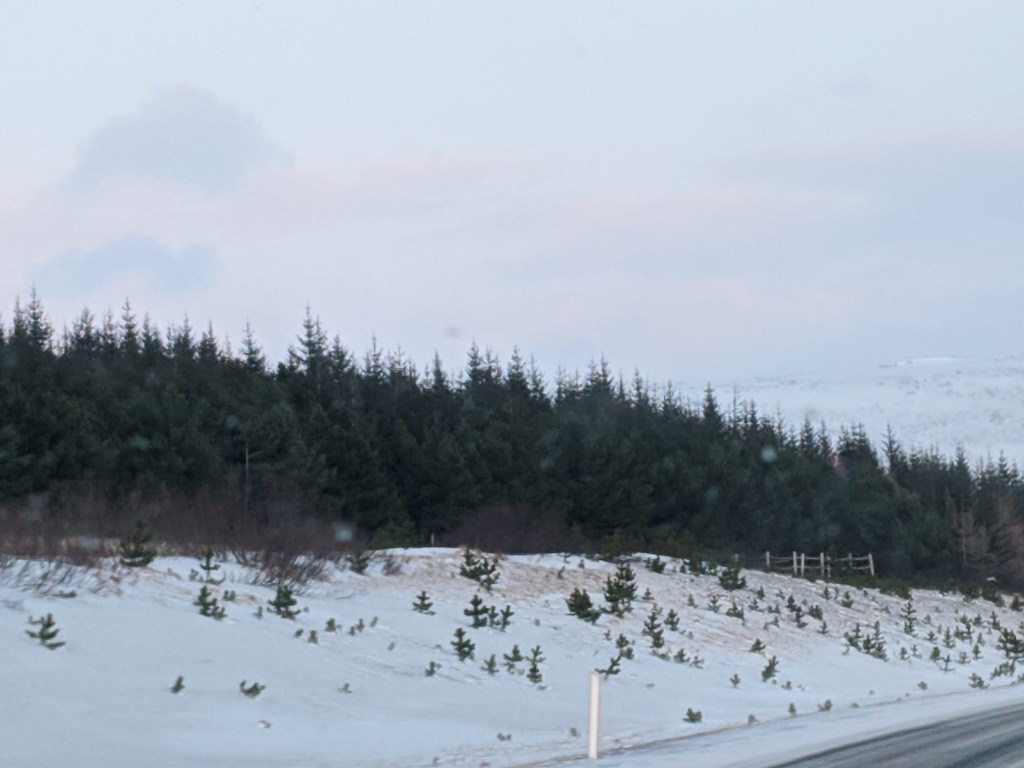
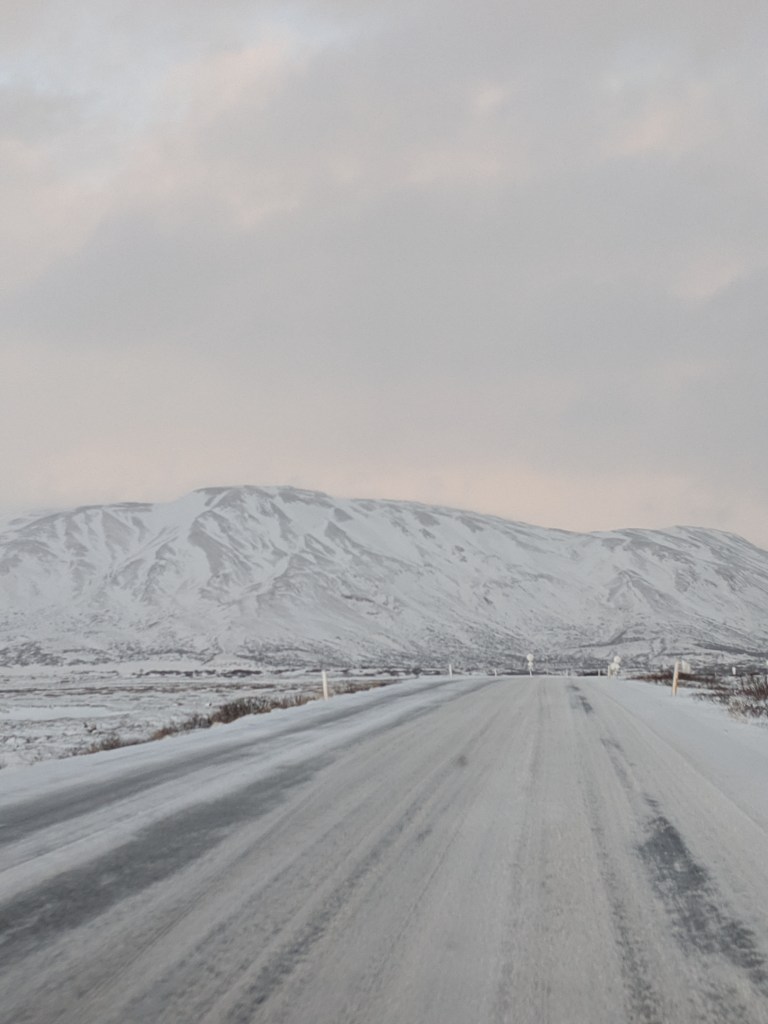
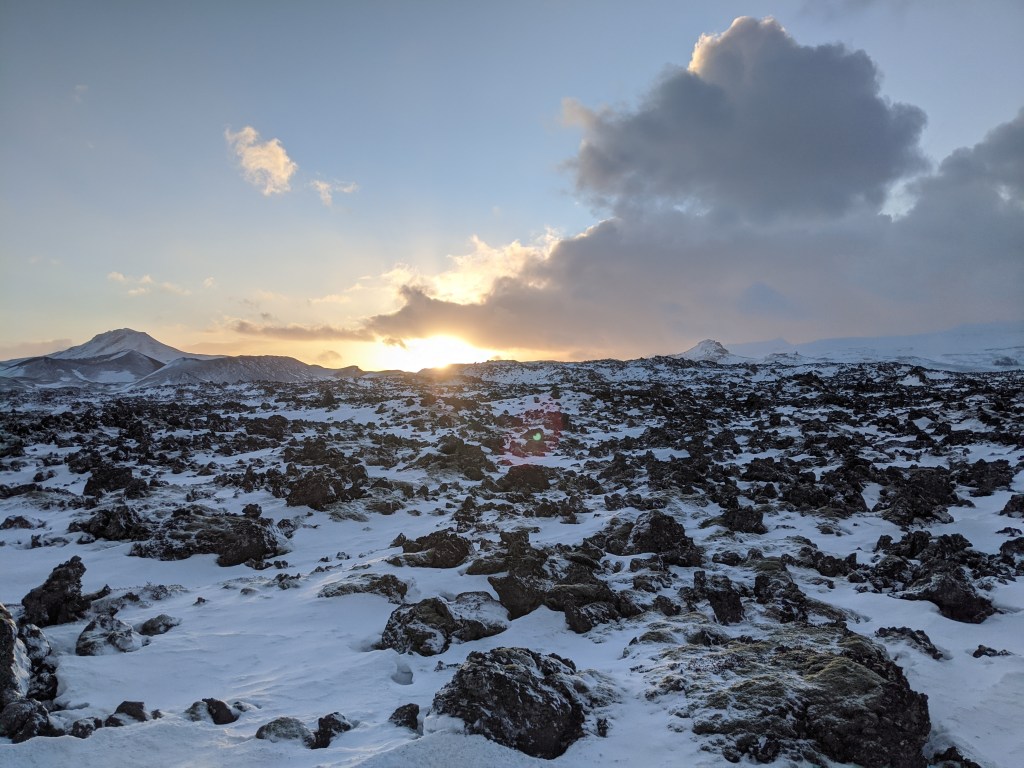
When we reached the end of the nubbin that was Snaefellsnes that day, we had a choice to make- change our plans and head back to Reykjavik, or carry on our route to Thingvellir. The roads weren’t looking in great shape but we had a couple of hours of light left and we decided to go for it. We had had some genuinely scary moments back south towards Reykjavik, the coastal winds combined with the icy roads led to some instability, not to mention the added stress of being tailed by a lorry. But we remained calm and soldiered on. On our drive to our accommodation, it genuinely felt like we could have been driving through clouds. The roads were quiet, the sunset was long and slow and we safely reached our accommodation Heradsskollin Historic Guesthouse, after another petrol top-up.
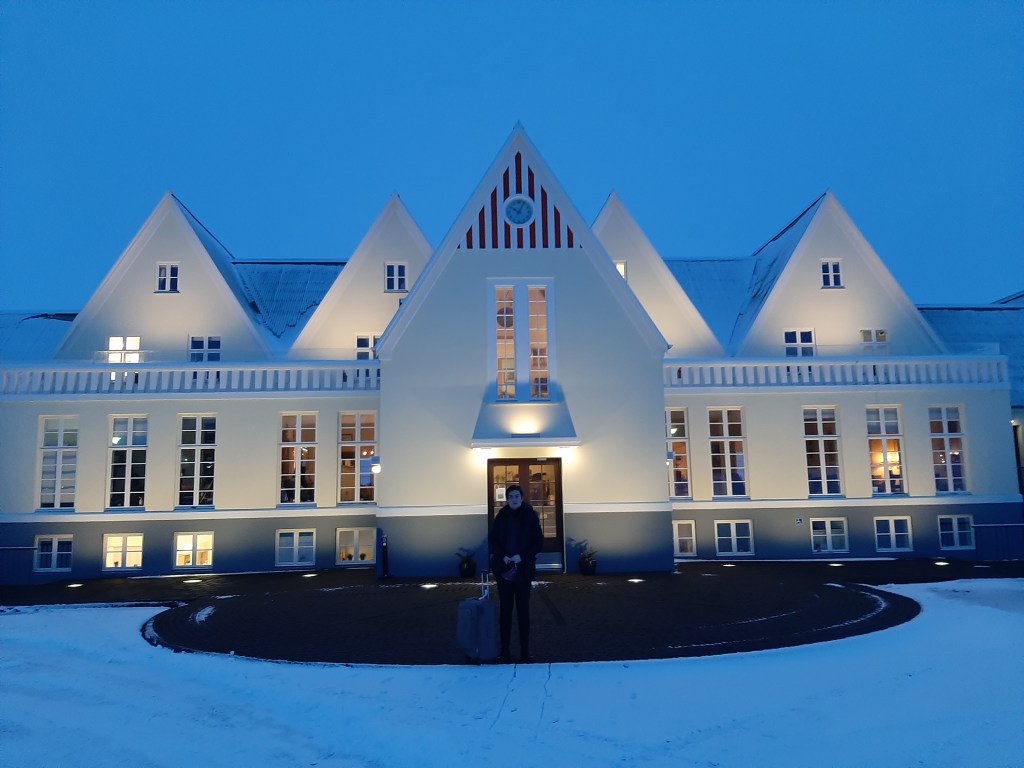
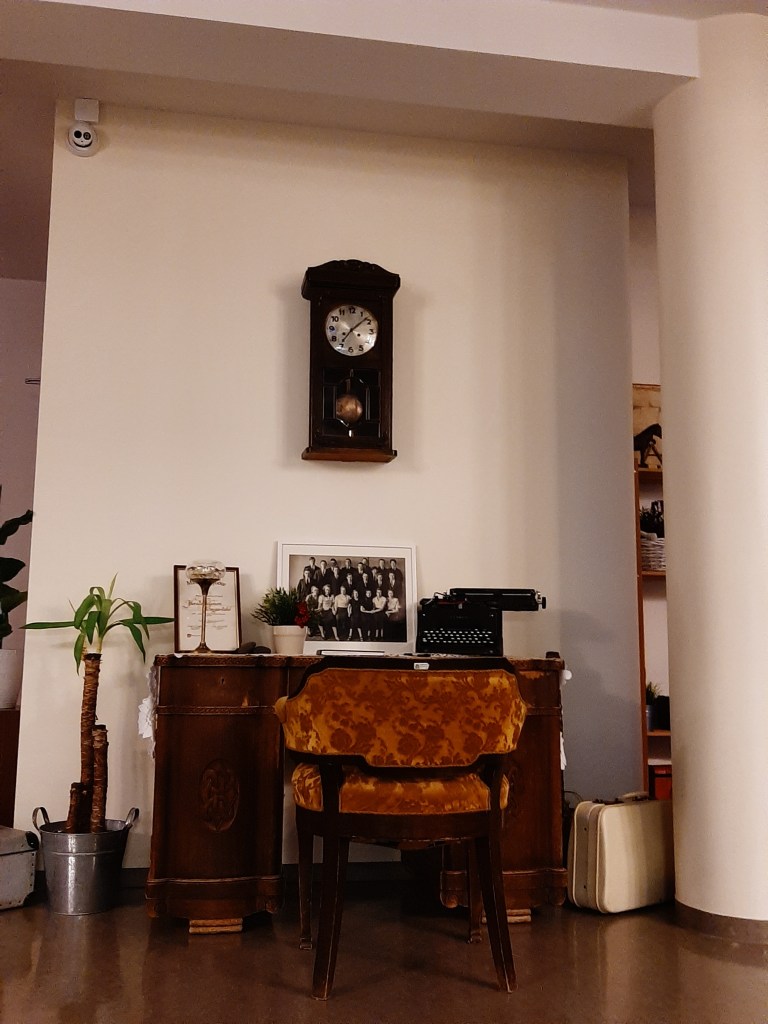
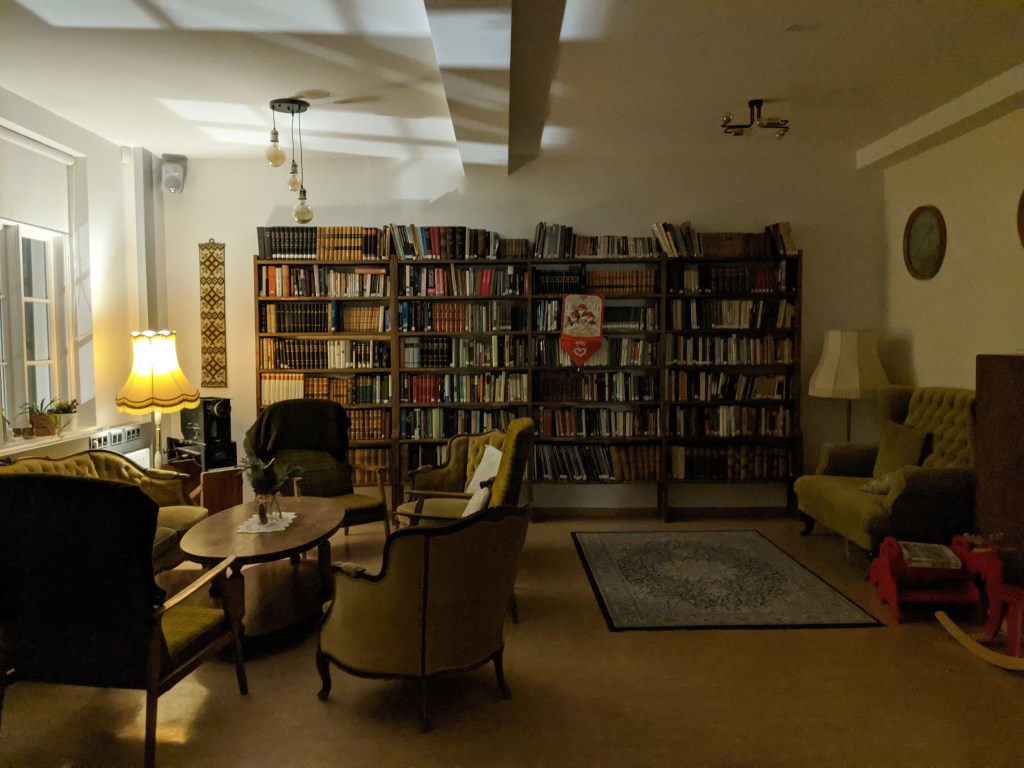
We were ready for this accommodation to wrap its arms round us and give us a nice peaceful night’s sleep and it certainly did. In the middle of a national park, it was one of the most interesting buildings we’ve ever stayed in, with a fascinating history. Almost a little bit eerie because it was so quiet, and so symmetrical and because it was sat between a lake and a volcano. Think somewhere between The Shining and The Grand Budapest Hotel. This building used to be a boarding school, it was one of the first places a parliamentary-style gathering occurred in Iceland. Not to mention, on the very typewriter pictured below, Halldor Laxness (winner of the Nobel Prize for literature for Independent People) penned many works during summers here as a boy and it was one of his favourite places to be and you could see why.
After a wander by the lake and an optimistic look at the clear sky to check for Northern Lights, and watching a few locals take a dip in a (presumably heated) pool, we hit the hay for the night.
DAY 4:
The Golden Circle.
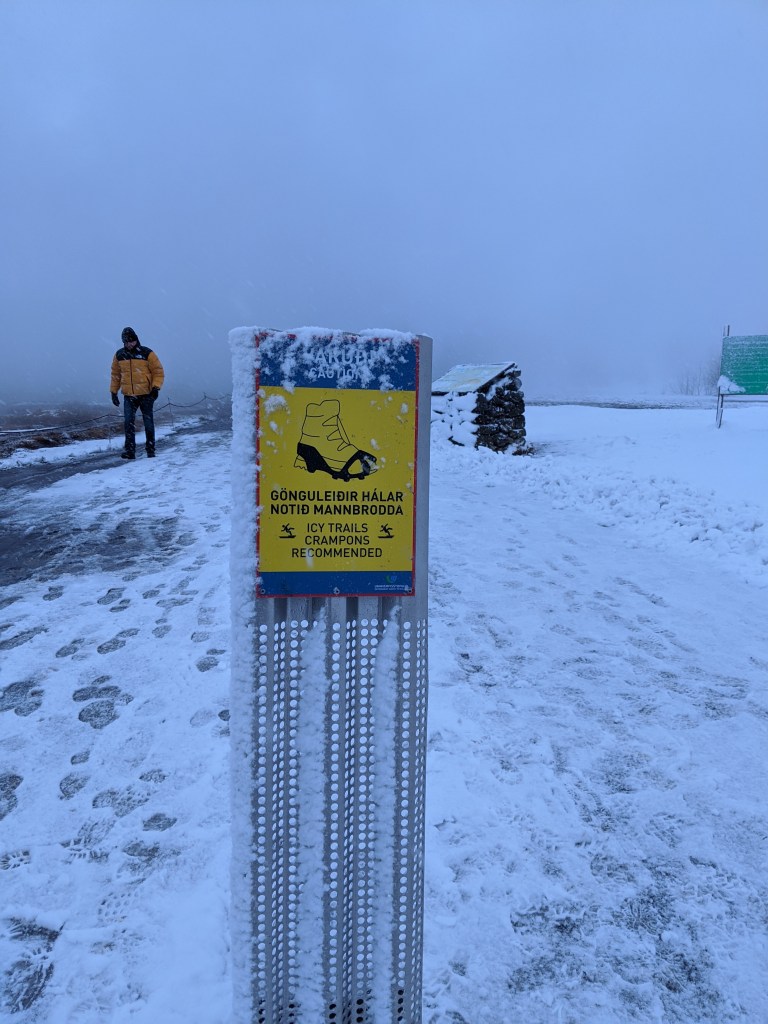
Today was set to be a big one. Our own unguided Golden Circle tour. We were already pretty close to everything at our accommodation, but the weather was perhaps the most worst yet- which makes a lot of sense considering we were in a mountainous National Park in Iceland in late January. We decided to soldier on (slowly). The main road block – pardon the pun – today, was the snow and sludge that hadn’t been cleared by the legends that were the road-clearance trucks. We realised where we should position the car on the road for maximum sludge-avoidance and we were pretty set from there on out.
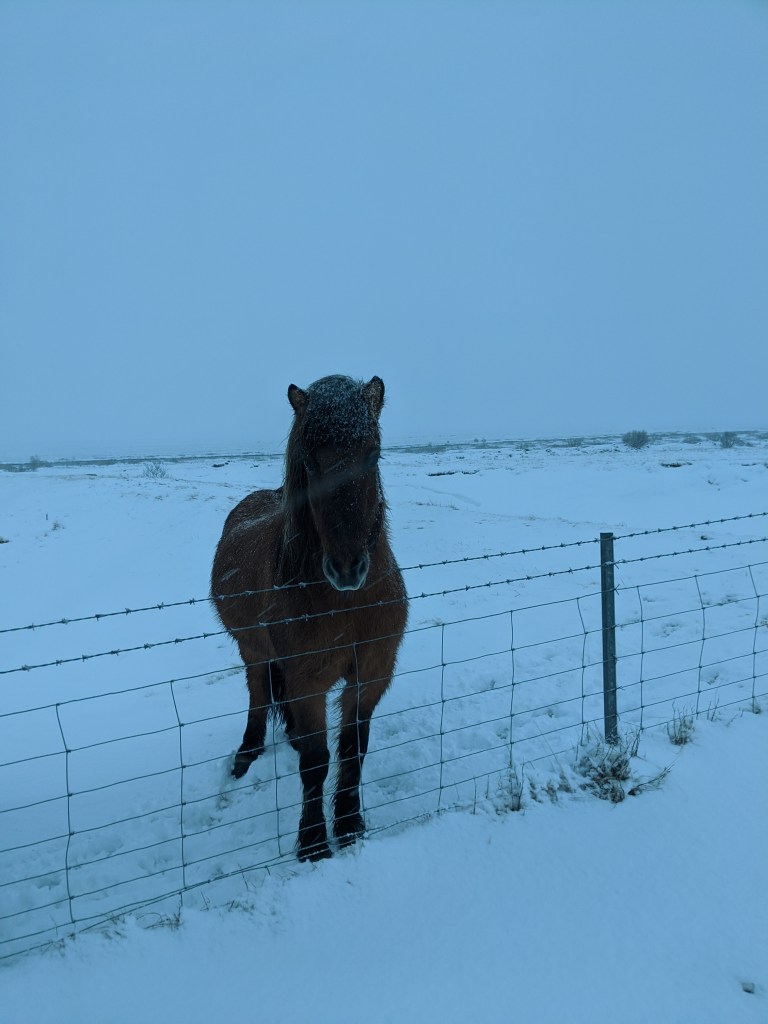
Our first stop should have been the Geysir but turned out to be some incredible horses that were right up to the fence. We went to meet them, pulling off the road into some pretty thick snow that we weren’t too sure we could reverse back out of. Honestly, the other cars on the road towered over ours- huge wheels etc. and whenever we saw one of similar stature to our own it felt oddly reassuring.
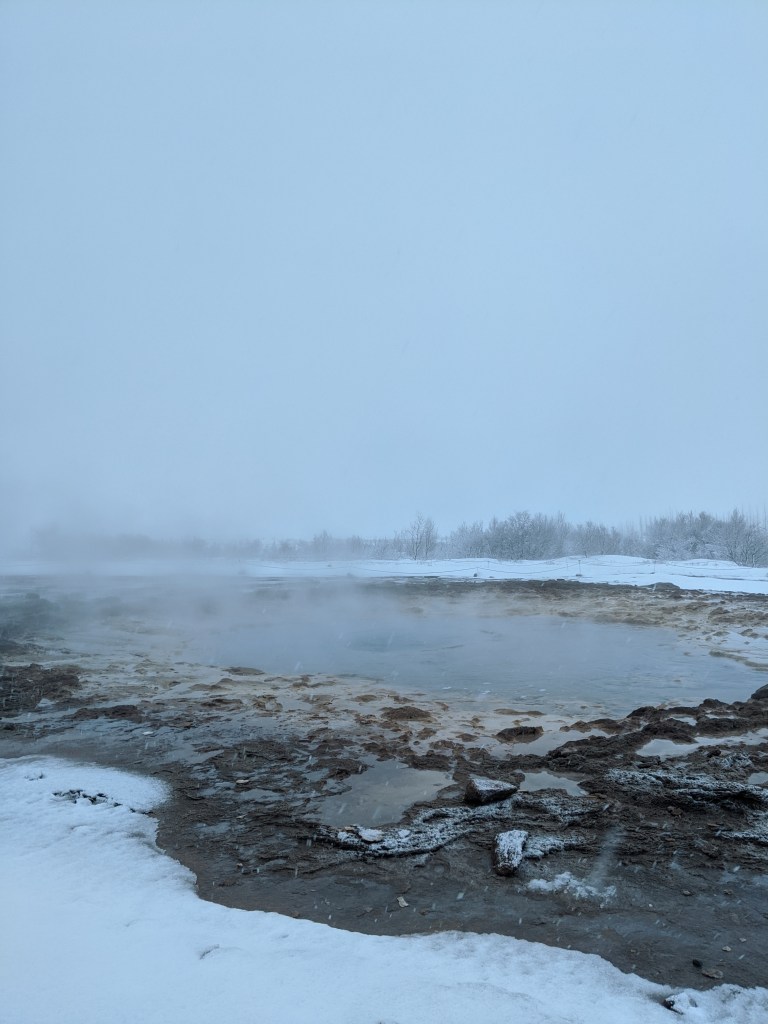
We managed to get out of the spot we’d got ourselves into and headed to the Geysir, which was incredible. We watched it ‘erupt’ and wandered around reading all about the science behind it. We threw snowballs into the hot pools and watched them melt and some of the pools were incredibly transparent. We were wearing the wrong shoes, but we survived anyway and yes, the whole place did smell like eggs/Sulfur.
Next up on the whistle-stop tour was Gulfoss, which turned out to be way bolder and more dramatic than either of us could have imagined. When the perspective was taken away, you could imagine it as a crack in a sheet of ice. The stories written on the paths were inspiring- so many people had fought to keep the waterfall safe, developing deep connections with its natural beauty and wonder – in 1907, when propositioned by an Englishman who wanted to buy the waterfall to use for electricity generation, a local farmer Tomas famously responded “I won’t sell my friend“. The wonder of the grey water against the white of the snow was such a contrast. It is worth a visit for sure- the gully that the water travels down is enormous and strangely…sideways.
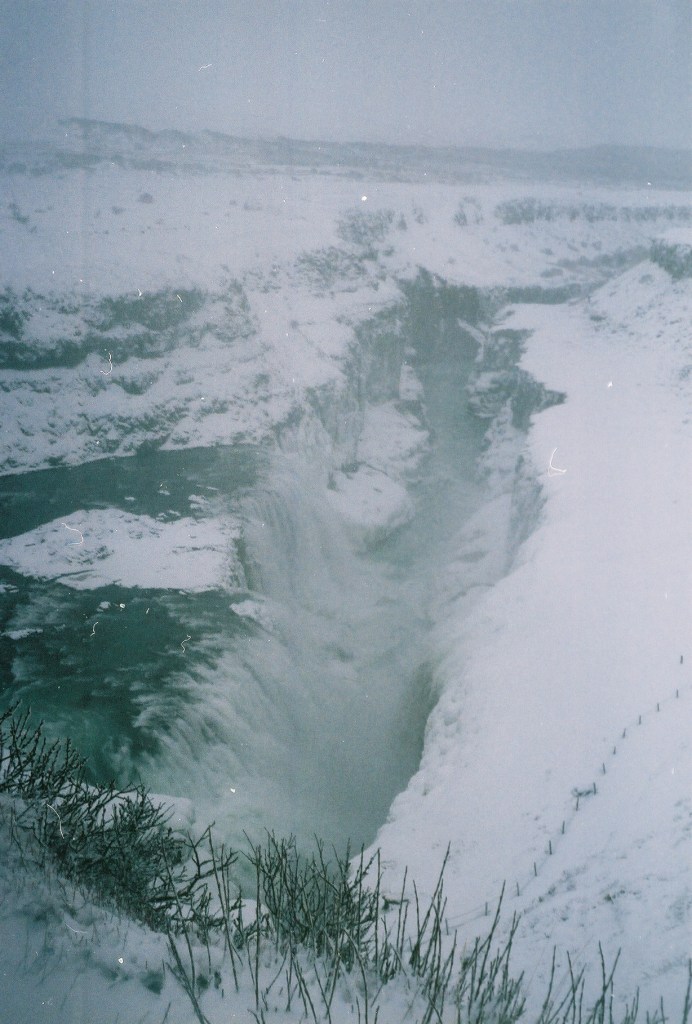
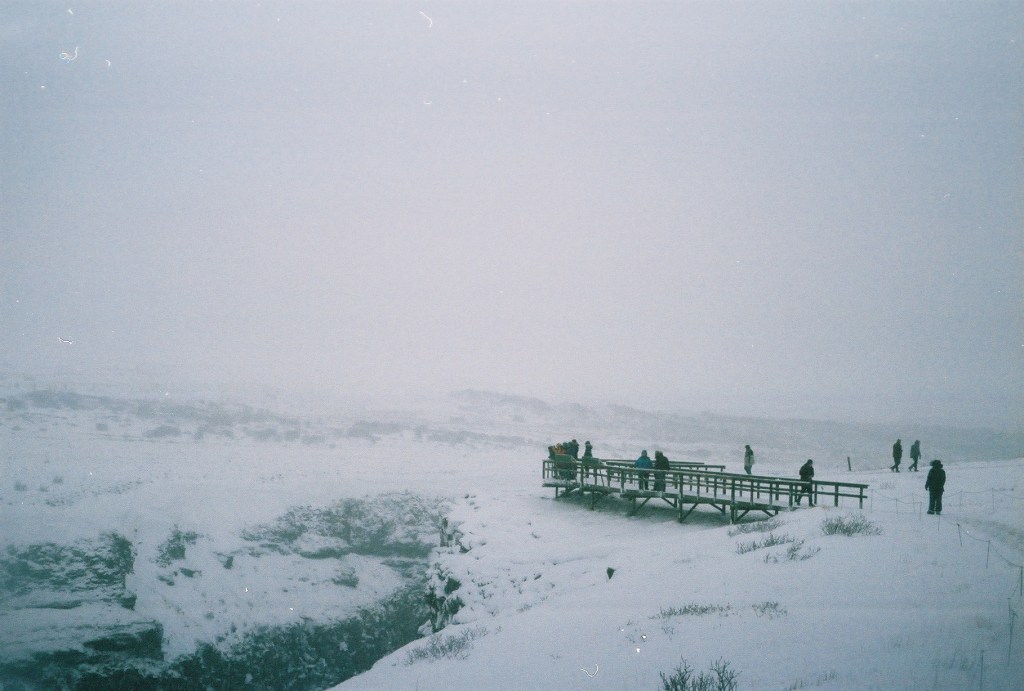
Finally, we visited Kerid Crater– we were originally going to go to Fludir but we decided to avoid this road because the app had it colour coded as ‘blue’ at the point, which meant slippery. And we’d had quite enough of blue roads if they could be avoided. Instead we to Selfoss, via Kerid Crater. In pictures, we’d seen a blue pool in the crater, but of course, on this day it was a snow-covered sheet of ice, quite magnificent to behold nonetheless.
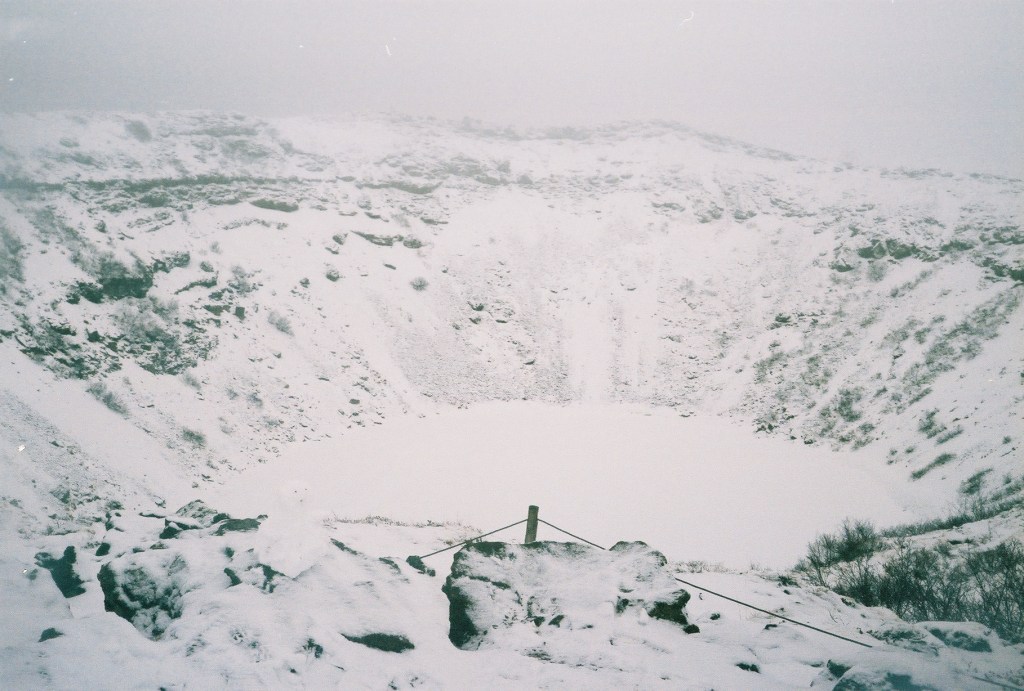
We had to pay to get in to see Kerid, one of the few places on the whole trip- but it was no more than a couple of pounds, being around 650 Icelandic Krona (at the time). And it was worth paying to see.
Following this Golden Circle adventure, we hit the road straight to Selfoss, which was one of the bigger towns in West Iceland and once there we hit up a big Bonus to stock up on Icelandic goods. We didn’t hang around in Selfoss too long as we still had a ton to do! And we knew we’d be back soon on our route.
Next up was a few waterfalls as we reached the South coast road. As we came out of the National Park, the roads really cleared up which allowed us to relax a little more. The wind wasn’t so strong today so driving a long a coast road didn’t feel so scary. We also gained speed and thus gained back some lost time. Our goal was Vik– the furthest East we would end up going. We had initially intended to get much further East, towards Hof but weather conditions on the day we would have had to venture back West meant we changed our plans and cut out about 8 hours of driving in the process. But if you can make it that far East, do a bit of research into the Diamond Beach before you do!
The weather hugely improved as the afternoon went on and the long roads were quite magical- the scenery seemed different on the South coast because the ever changing mountains and tiny houses beside were on the left as we drove, with the coastline flat and expansive constantly on our right side.
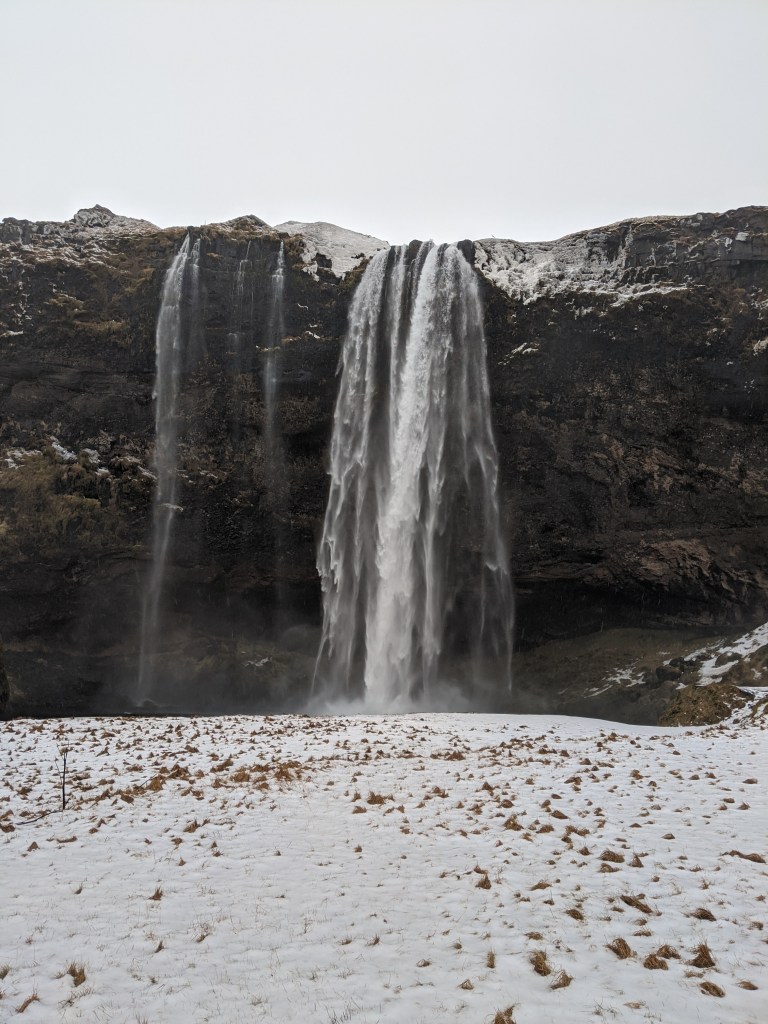
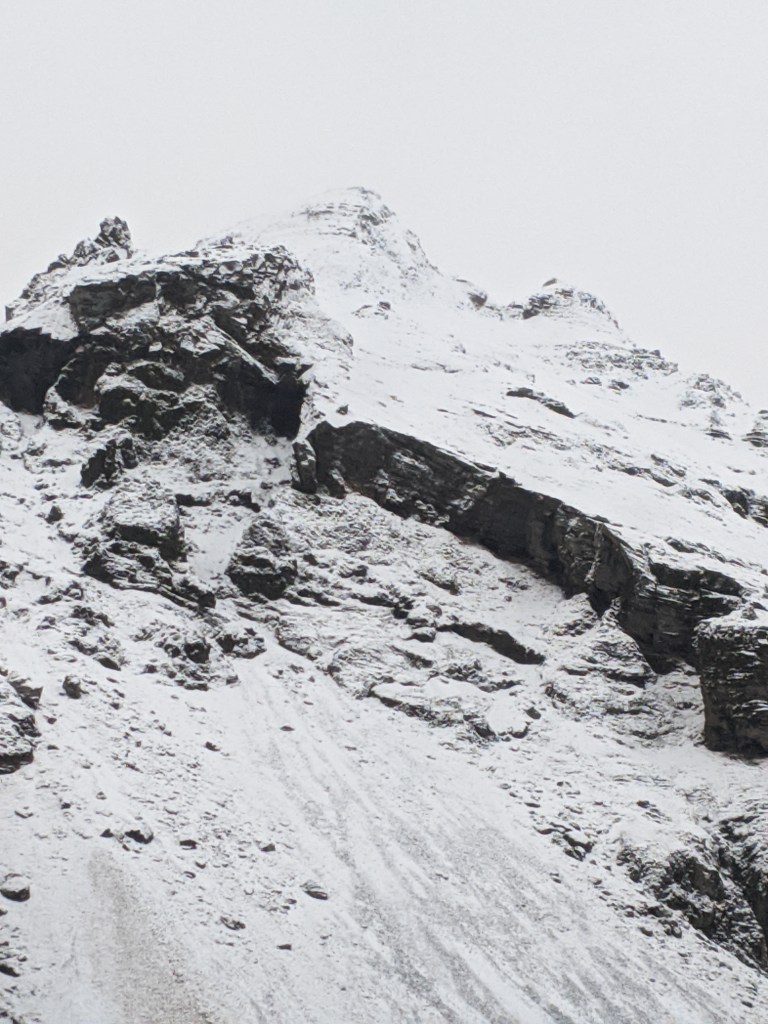
We pulled off first at Seljalandsfoss; we’d seen it approaching as we drove up the road. We pulled off and conscious of time, didn’t pay for a parking ticket rather just briskly approached the waterfall, got sprayed, filled with wonder and ran back off to the road- deciding we’d come back past and explore a little further tomorrow.
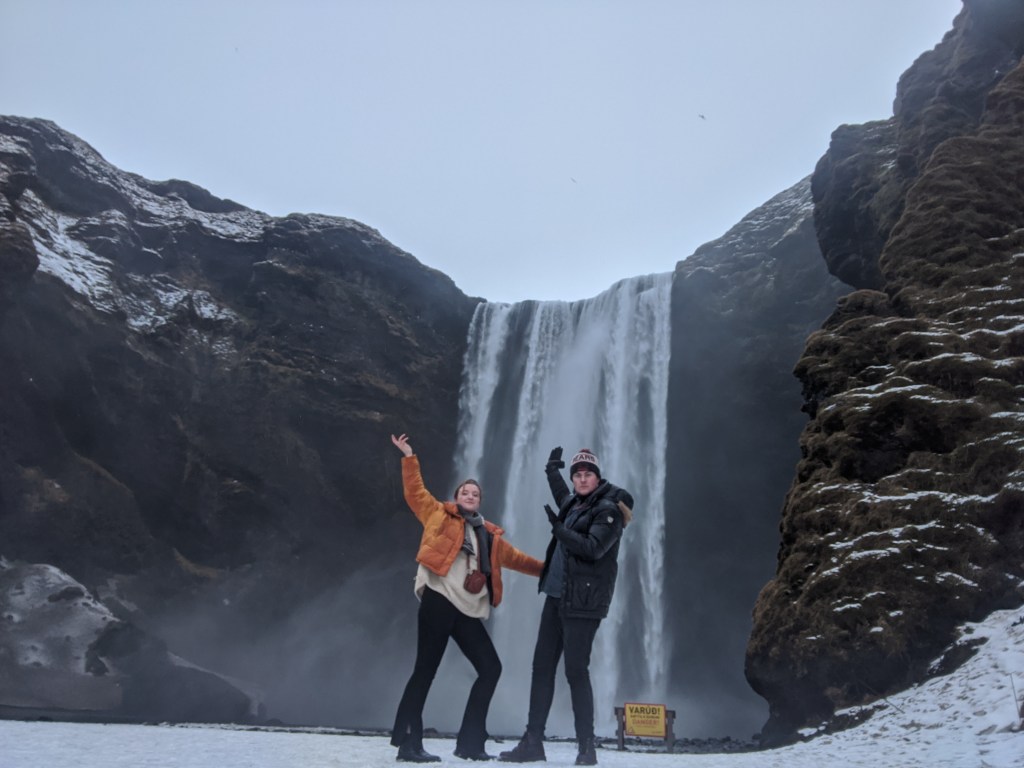
The next waterfall on the journey was taller than the last- Skogafoss. Black sand at the base, we approached it and got covered in spray. It was magnificent.
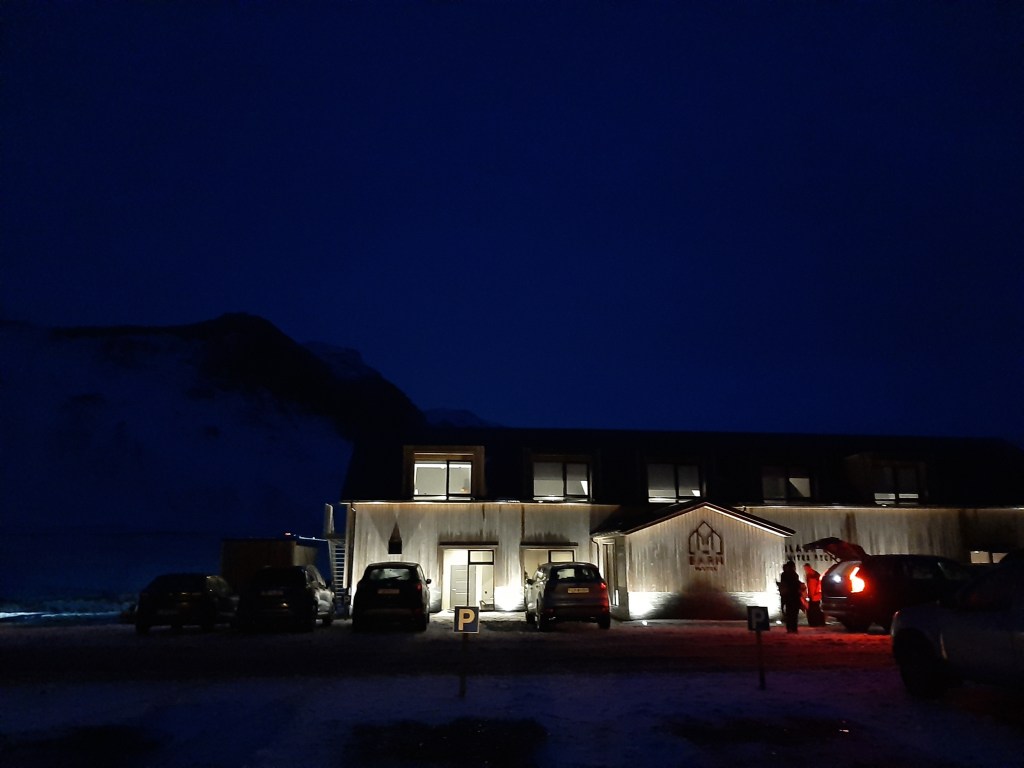
It was getting pretty dark and late so we decided to head for the new home for the night, the nicest hostel we’ve ever stayed at- The Barn, Vik. It was very close to Reynisdrangar Beach and Cliffs, and had a distant sea view. We cooked up some noodles in the kitchen, wandered outside in another failed attempt to see the Northern Lights following some drinks and games of chess.
DAY 5:
Cold water and the Northern Lights.
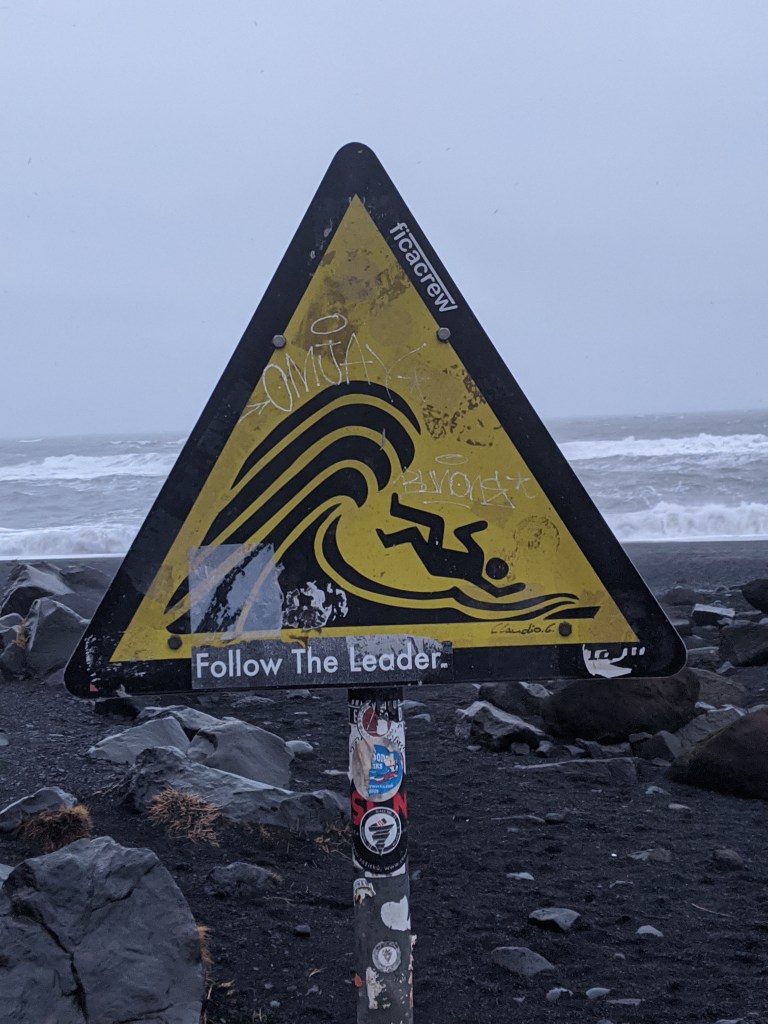
First thing it was pretty foggy and we’d planned to walk to the cliffs, but given the circumstances and time constraints we drove instead. We’d had a chilled morning since check-out wasn’t until 11 am. There was a sign as we approached Reynisdrangar (the set of many popular TV shows and movies including Game of Thrones and Rogue One) warning us of ‘sneaker waves’ that, as the name suggests, you wouldn’t see coming- pretty dangerous.
The beach was black sand and the cliff was formed of Basalt columns, which we climbed a little. Birds surrounded the cliff top and we checked to make sure they weren’t puffins at this time of year: they weren’t. We went inside the cave which was huge and pretty open and we saw more trolls frozen out to sea.
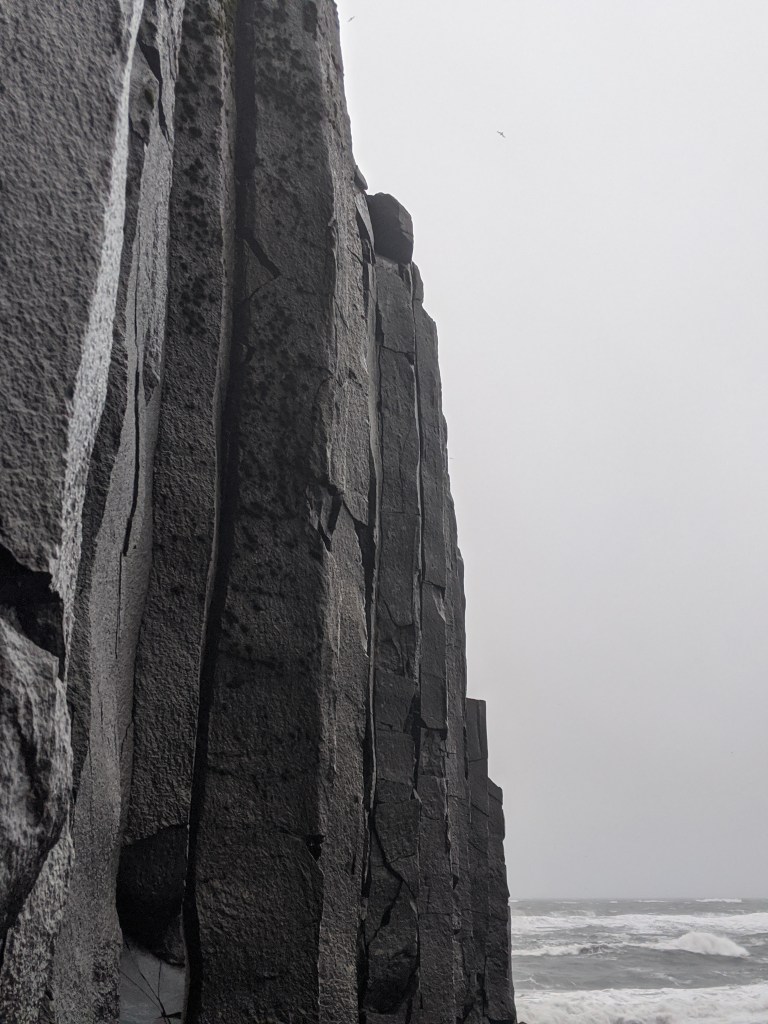
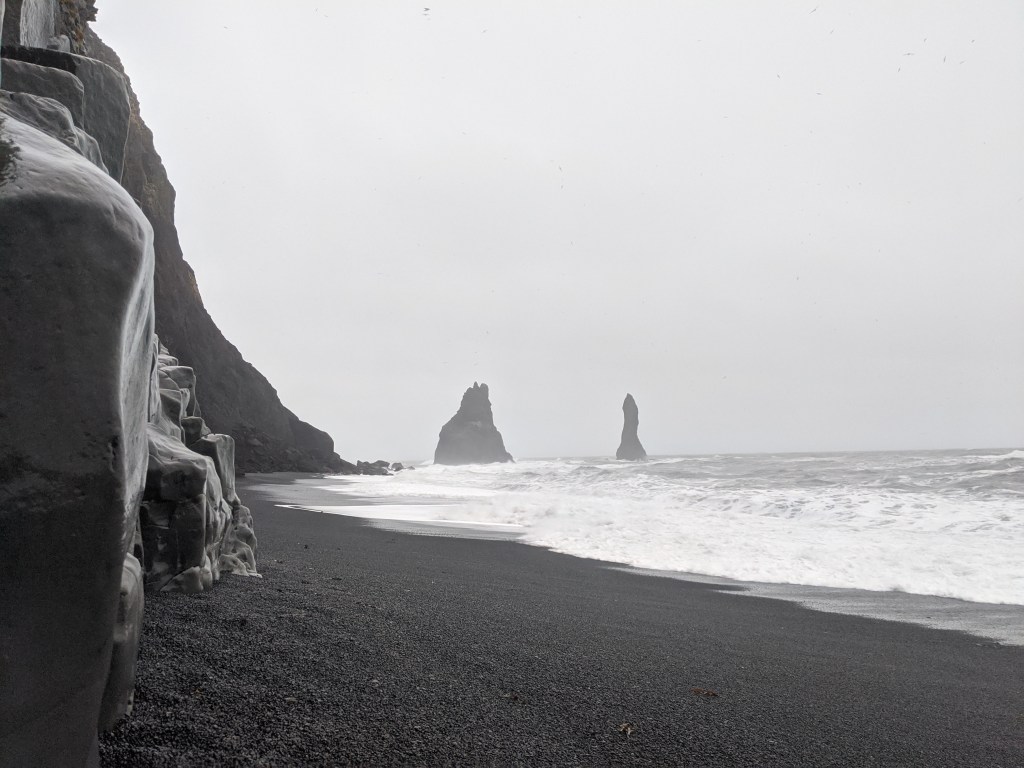
Taking a pebble and a few photos, we moved on to our next stop: Vik; which was a small town with a few shops and a petrol station. The wind was picking up and our concerns for things getting worse as the day progressed meant we didn’t hang about for too long, though long enough to stock up on supplies and get a nice pastry. We also had a look at souvenirs, including Icelandic jumpers and some pretty odd Yule Lad merchandise.
Solheimasandur Plane Wreck was the next stop on our way back west. We parked up and were greeted by a sign and some exhausted looking tourists walking our way, both stating this could take close to two hours to walk. The weather was quite bad and just that week a couple of tourists had tragically died of hypothermia on the beach by the wreck, so we aired on the side of caution. It was quicker, safer and we certainly paid for it. It was around £16.00 each for the return journey up the beach. The truck we got to go in was certainly novel and had huge wheels which we weren’t used to in our little car, but it really was pretty expensive. Thankfully, it was worth the cost.
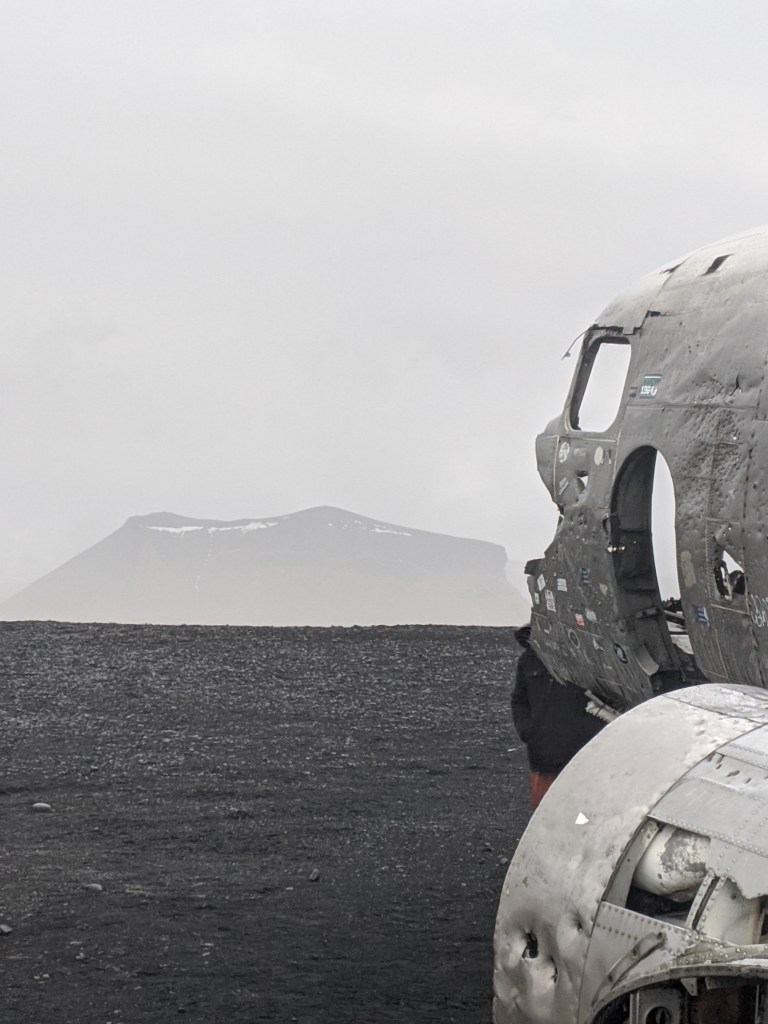
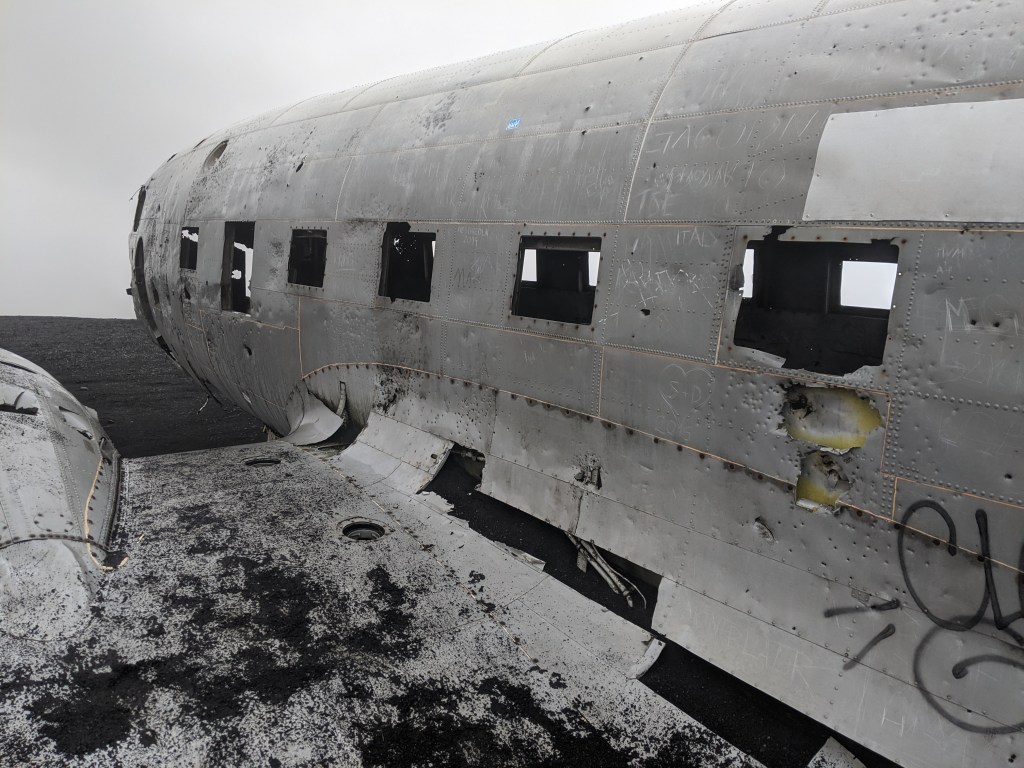
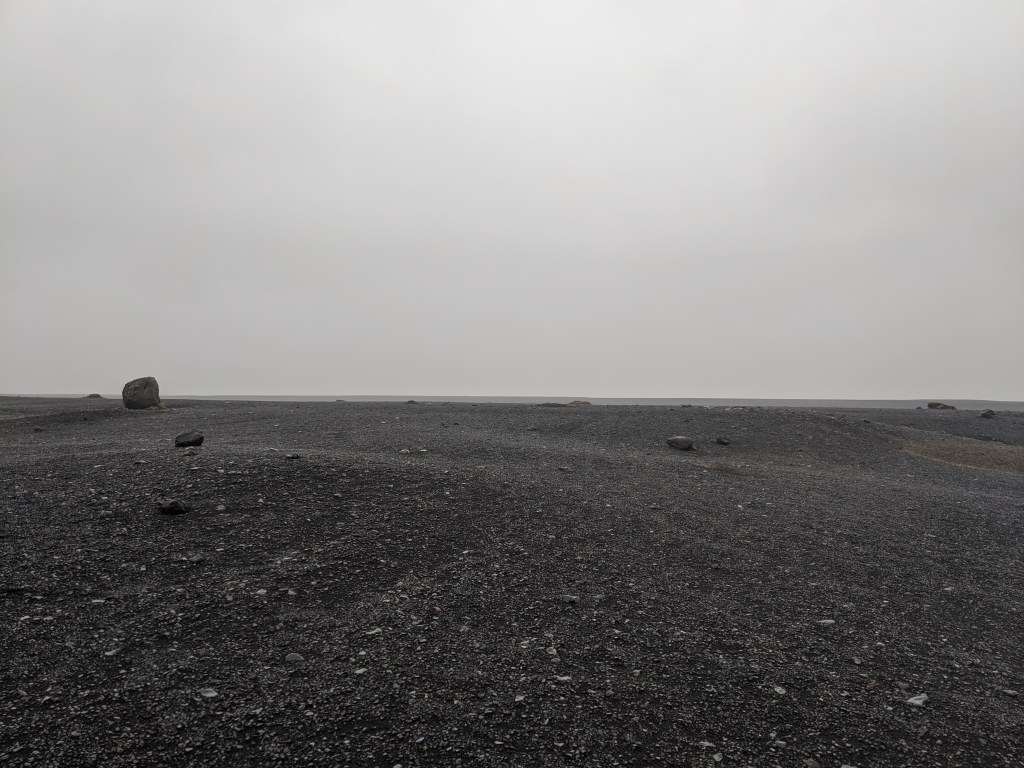
The plane wreck was amazing in the setting- there were wires dangling from the cockpit, the wings were all but gone and there were bullet-shaped holes in the side of the plane which we later learned were caused by rocks in the wind rather than bullets. The black sand surroundings and the sea, so rough because the next piece of land south was Antarctica, made this place look like the surface of Mars or something. The sun came out whilst we were there. It was unique because you could go inside and generally explore. For Wicke, the man who crash landed, it must have been a cold walk to shore.
Following this, we headed back to Seljalandsfoss, having only seen very little of it the day before. We paid to park this time intending to stick around a little linger and did the 1 km walk to Gljufrafoss, the lesser-known sister of the main attraction. You could venture ‘inside’ Gljufrafoss falls. When we arrived, we quickly realised that this would involve getting pretty wet from the waist down. And we were up for that. Why have a car full of changes of clothes if you can’t make use of it?
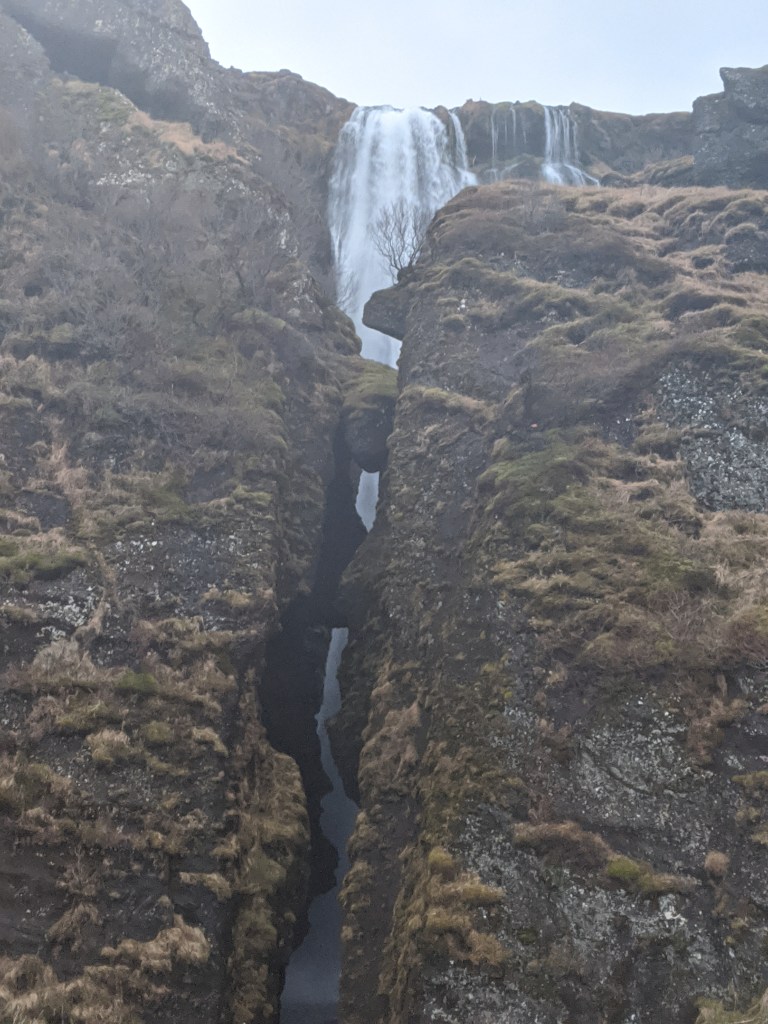
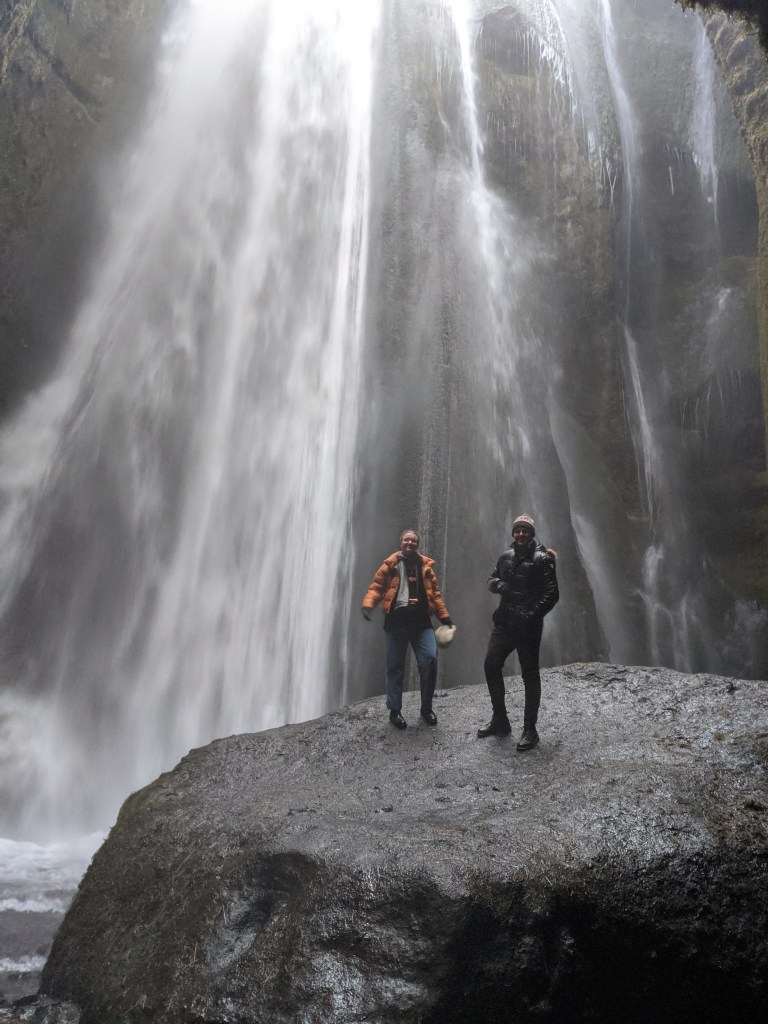
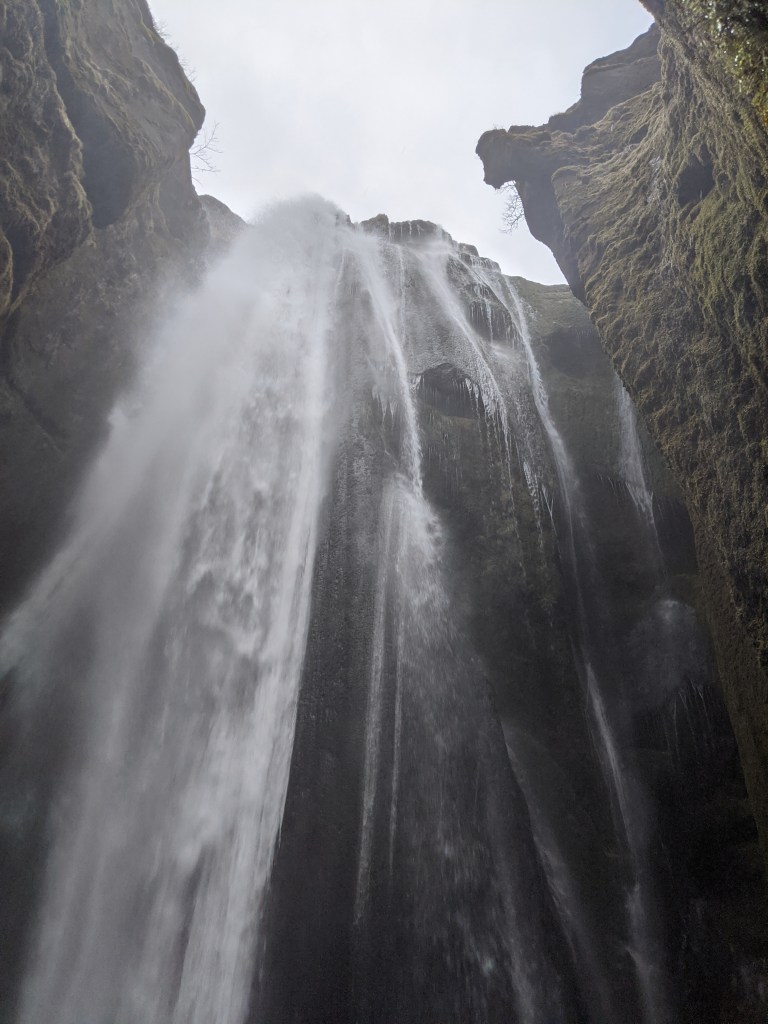
We waded in- it was freezing of course- but it felt like people had tried to put rocks in convenient places under the water as makeshift stepping stones. Regardless, the spray from the falls soaked you. It was exhilarating- the booming sound the water made, the coldness of the spray and the water in your shoes and the fear of slipping over. We made it all the way to the little island beneath the falls and looked up. We had persuaded a girl we didn’t know to join us and a boy came too- he’d taken off his shoes and seemed to regret it. If you have in-car heaters, maybe leave the shoes on and dry them off later if you’re up for that! The 1 km walk back felt distinctly colder. We dried off and changed in the disabled loo, and then continued onto Selfoss.
The sunset was stunning and we felt like we’d been in Iceland for a little lifetime already. But for a couple of random blizzards when we went beneath a storm cloud for a few minutes every so often, the drive was really pleasant. The warmer temperature meant all the snow had melted, meaning that although we were on the same road as the day before, it could have been a completely different place altogether. It was lovely to see greens and browns rather than whites and blacks. The waterfalls on the cliffs in the distance blew in the breeze too.
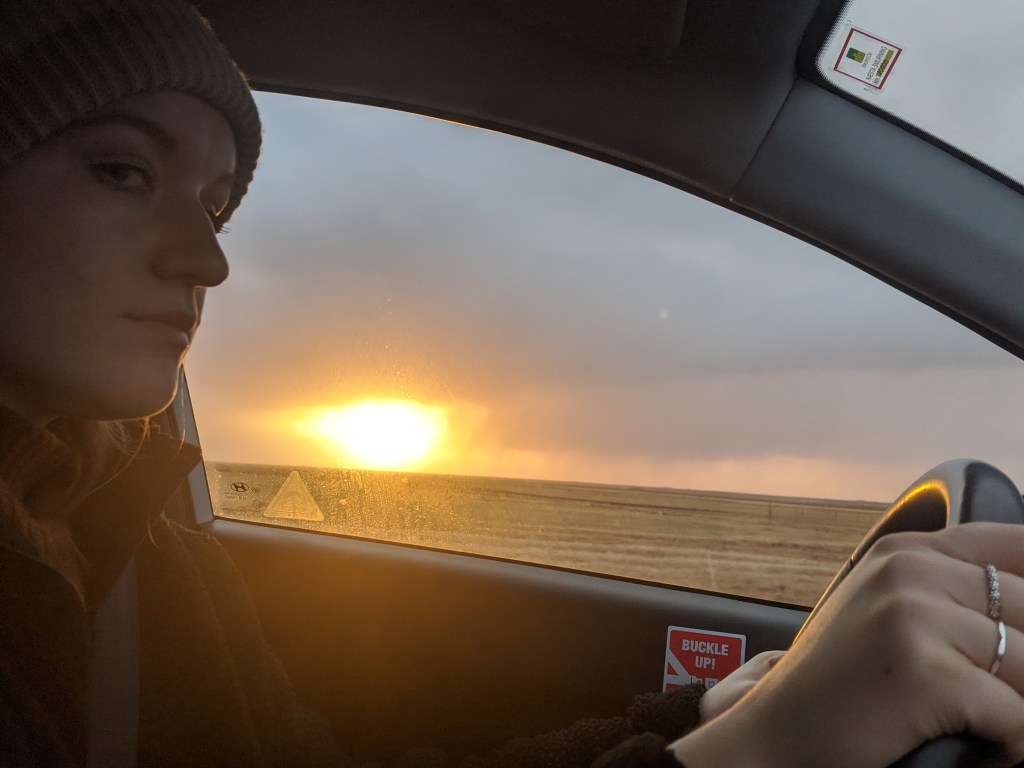
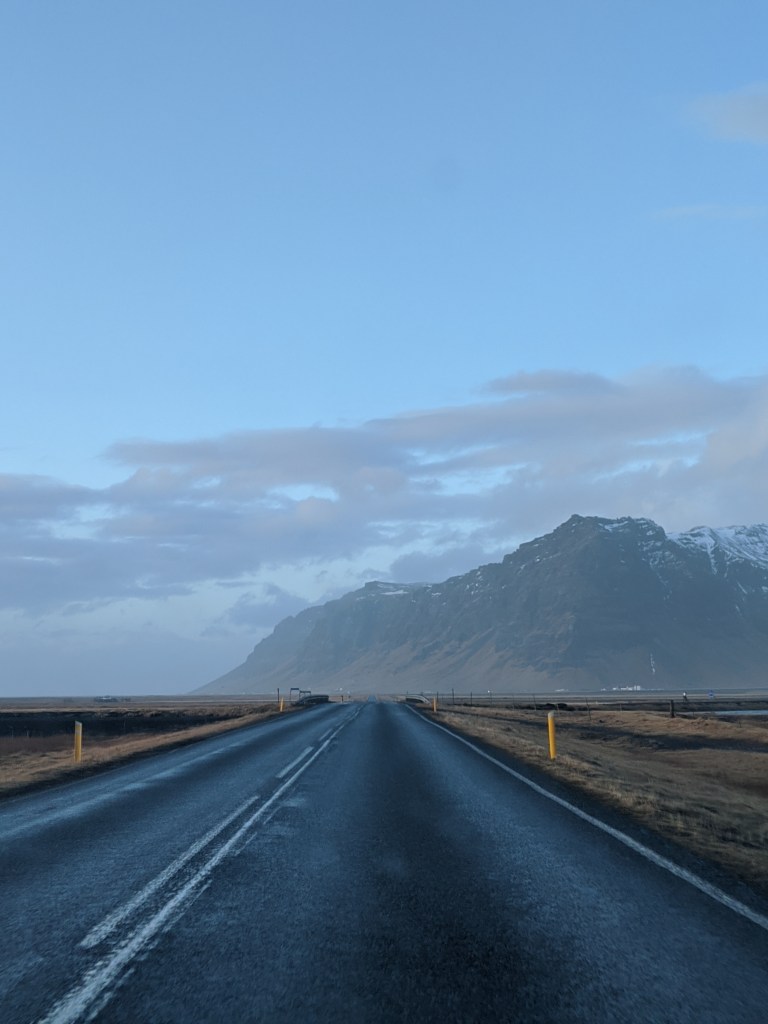
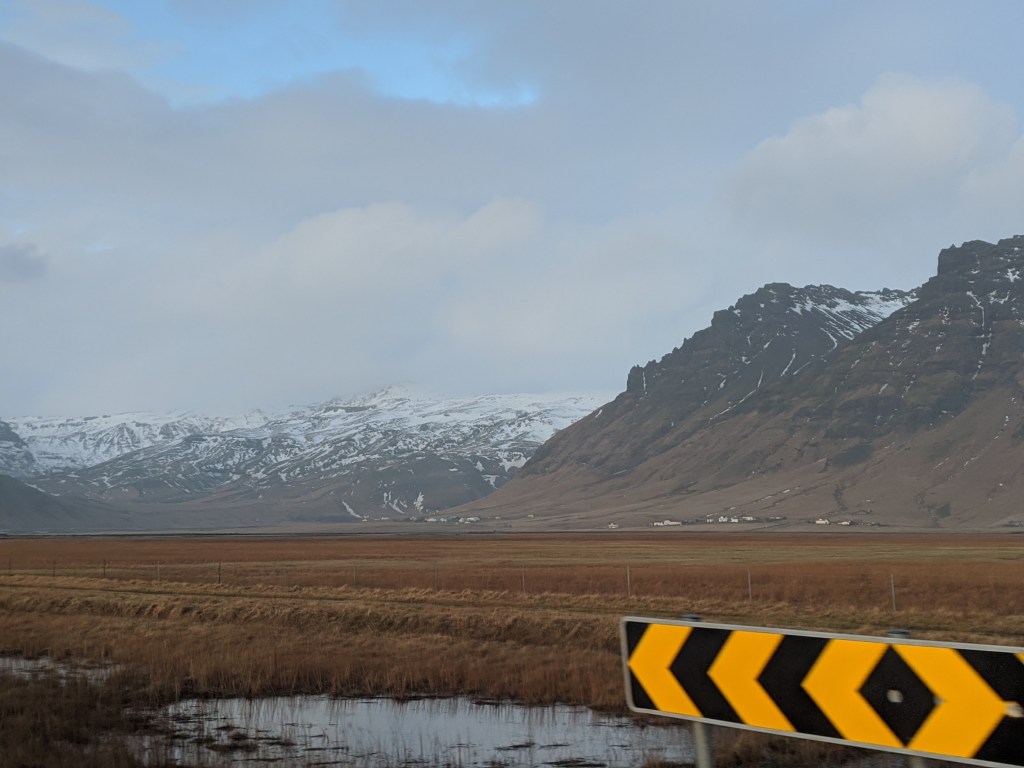
We arrived in Selfoss HI Hostel, which, to our delight had a hot tub in the back yard. We visited our favourite, Bonus, once again and got some nice food to cook. Then, having checked the weather for the coming days and the cloud cover for this evening, realised tonight would be our last chance (if we had any at all) to see the Northern Lights given the various forecasts. So at 7 pm, following all the apps we had- cloud cover, weather and KP index, we headed to somewhere distinctly less light polluted- the car park of a closed restaurant on the very south coast just beside Eyrarbakki, which we drove through. The weather on our way south was crazy as always but in the car park, the clouds cleared as predicted and we saw the Milky Way which was unreal. We stayed out there for about an hour looking up but as the clouds came back we decided we deserved some time in the hot tub.
In the hot tub, we were on the lookout to a degree but had all but given up on seeing the lights. At around 9 pm though, we spotted a speck of green in the distance. At that moment it was all systems go. We were super lucky to have been outside at that time but couldn’t have been less prepared. We ran barefoot through the snow in the garden, threw on anything we could and ran to the car frantically. From the car we knew we were right and the green seemed slightly more intense now. We were elated and the roads were snowy, so in the excitement we had to remain sensible and drive carefully towards the lights and out of town, where light pollution was less. We ended up pulling off on a country road, getting out, hair still wet, and running down it. We could see Orion, the Plough and the ethereal, other-worldly display above; the alien dark green spanned the width of our vision behind and above trees. It was incredible to think that nothing but nature created this and it felt, where we were, like we were the only ones looking. We laughed and celebrated and took photographs and really understood why people believe in something beyond humans and Earth in Iceland. Truly, it felt like a weight-off to have seen them, as much as we feigned nonchalance in the days before. It was pure luck and it was perfect.
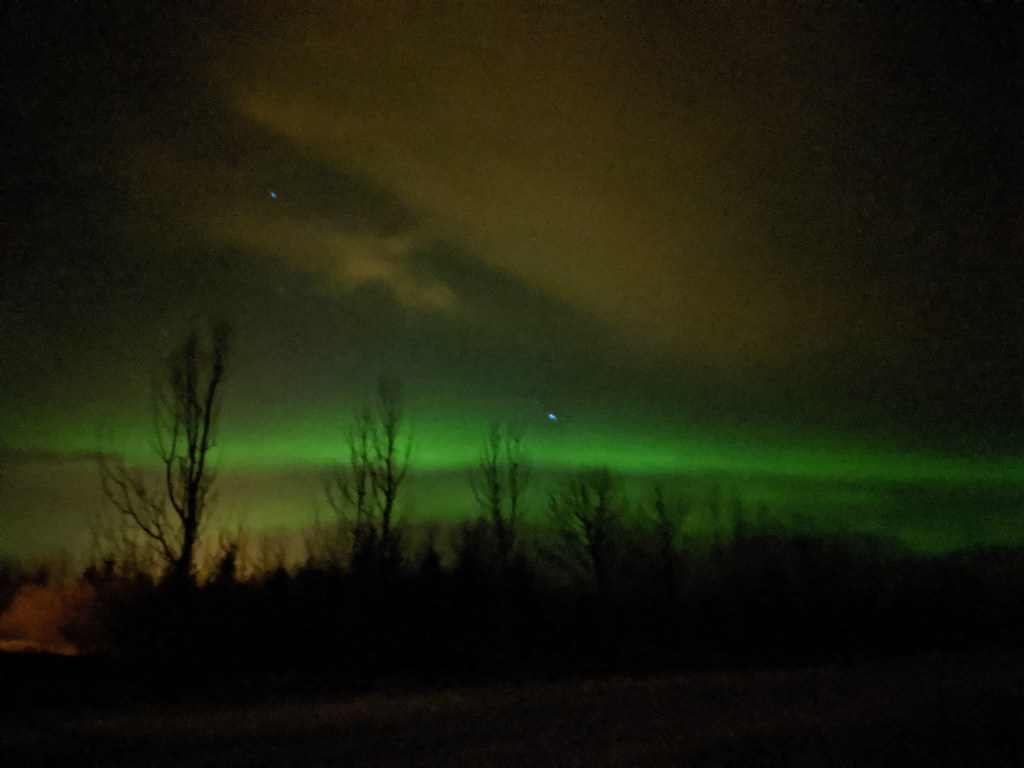
For more advice on chasing the Northern Lights, click here!
DAY 6:
In hot water.
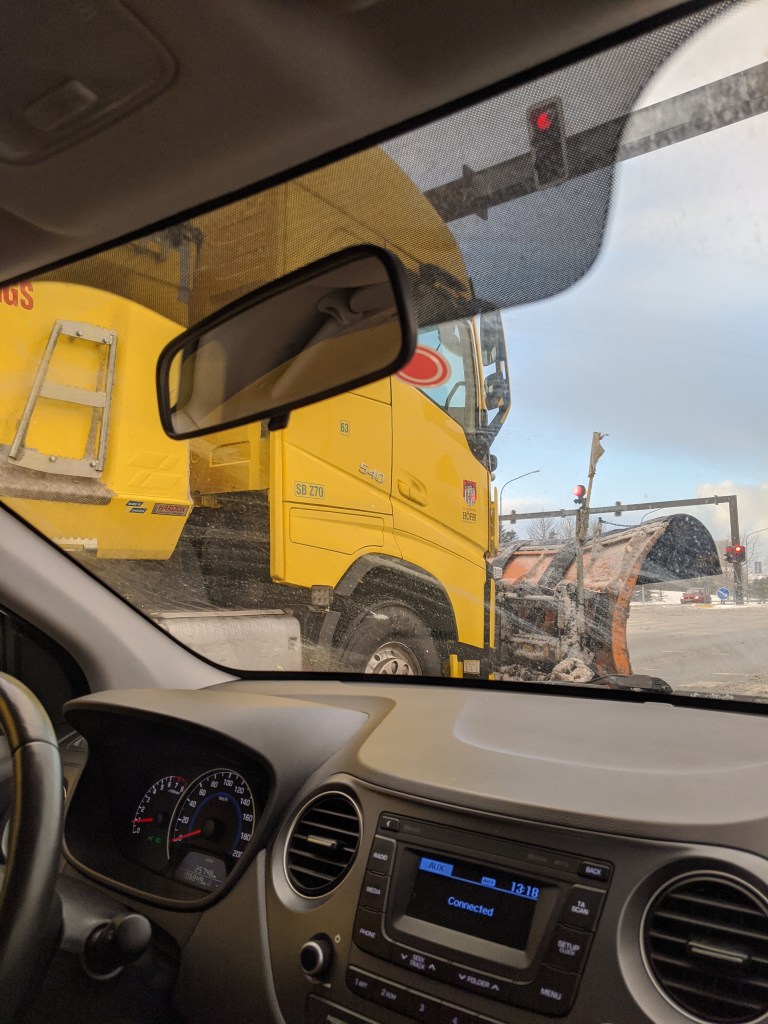
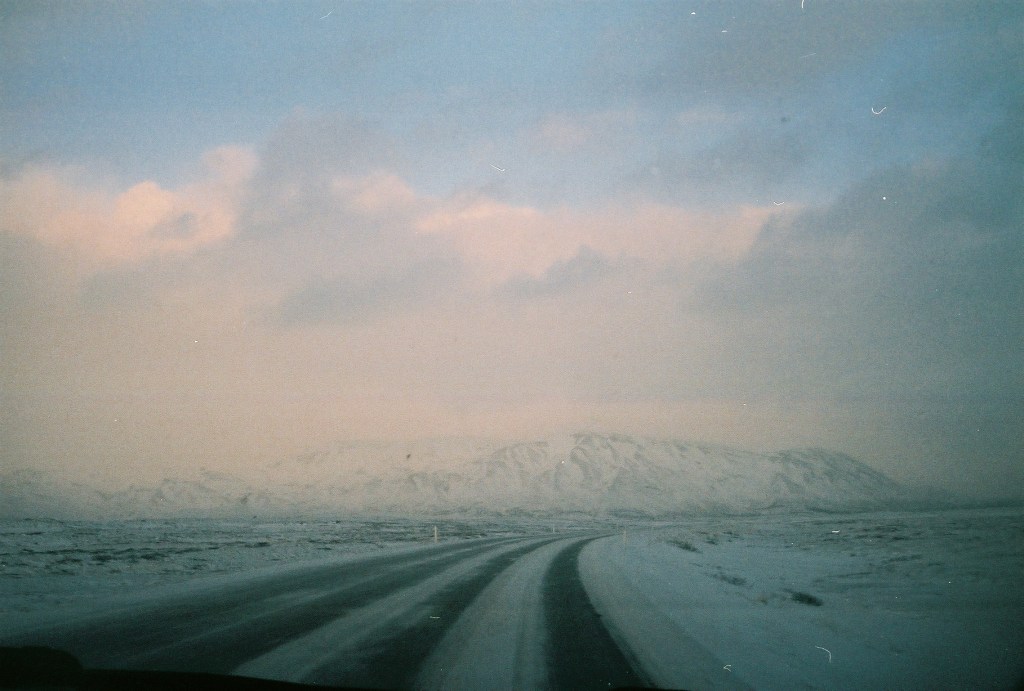
Today the weather was the worst yet- beyond ‘soldiering on’ kind of bad. We tried at first to bide our time by chilling around Selfoss but in the 60 km winds and snow that proved difficult. We got a hot dog from the popular Pysuvagninn. We debated staying another night here, setting off later and waiting. But the daylight was never on our side and we eventually decided to set off. We had the Blue Lagoon Spa booked for that night in Keflavik, on the west coast and honestly we just wanted to get back into the city and not have to drive any other days! There had been weather warnings and the roads were all blue coded (slippy) or white (up to 10 cm of snow). We set off. You basically couldn’t see the road from the sky. We had the decision to do a longer road with potentially better conditions but more wind (coastal) or a shorter main road that was more likely to be clear and would get us there in less distance and time. The road safety app doesn’t update quick enough for the weather changing and there was always the possibility things could get worse. On the shorter main road, we saw a plough- we thought we’d follow it.
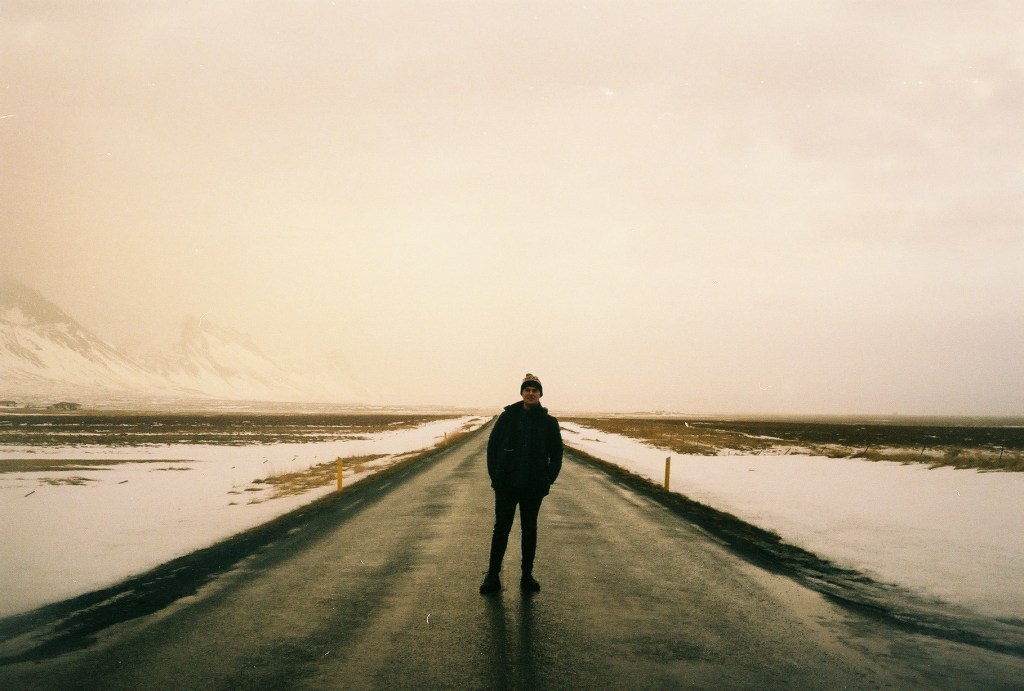
We headed along the road slowly and we went up and up Route 1, into thick horizontal blowing snow. Char was using the rumble strips of the road to stay on the road because you genuinely couldn’t really see. Off to the side could have been a drop, a cloud, a mountain. The co-pilot navigated beautifully and kept everything calm. Keeping calm was always the key. After an hour solid of treachery, we went down the other side and onto the snowy motorway, which in comparison felt so easy to drive. We were elated when we arrived safely back at Bus Hostel, and decided we’d pay the £34 each return to the Blue Lagoon on the coach (eek), just so our lives were in someone else’s hands for a change.
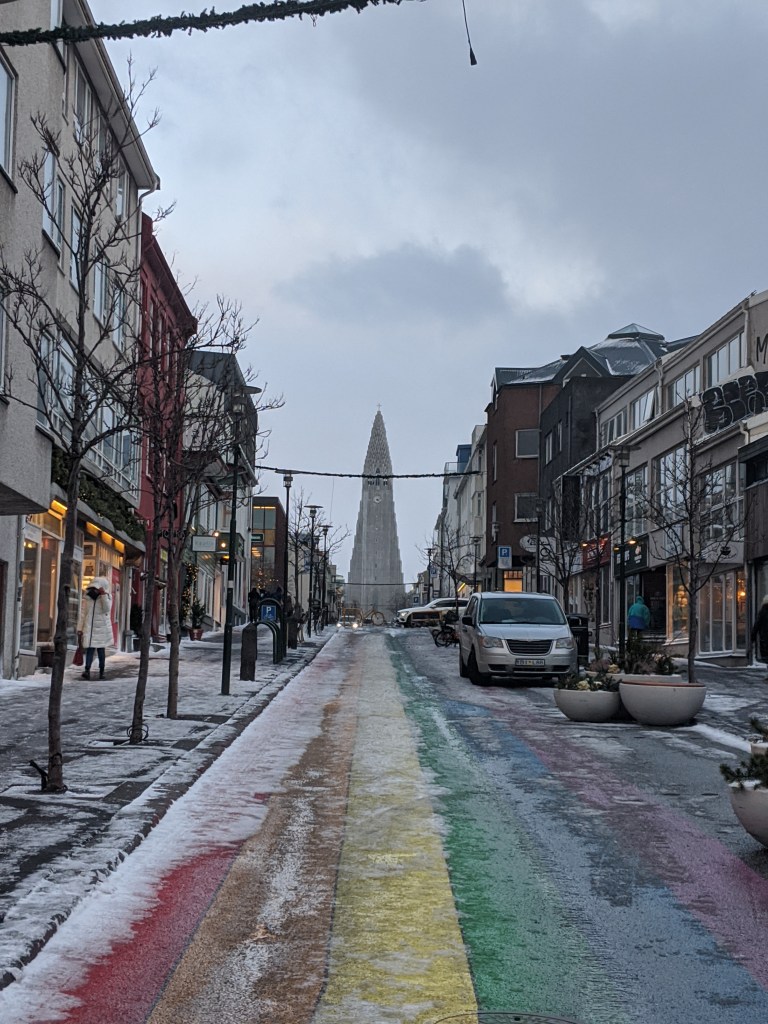
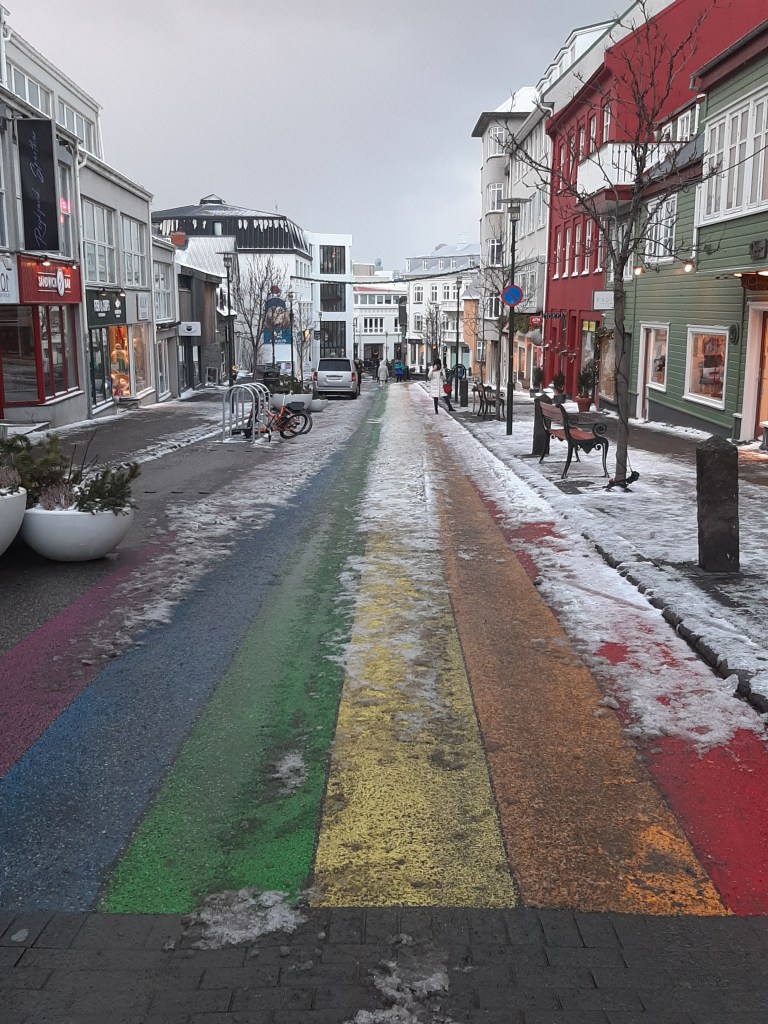
We walked into the city briefly and saw Rainbow Road (celebrating Pride!) and the Cathedral but we had little time as we had to get ready for the Lagoon.
The Blue Lagoon was amazing. We paid the discounted £43.50 each – it was discounted because of the time of day (it was dark) and maybe the time of year. In the dark, the blue element was missing somewhat. We were given face packs on entry, the whole place felt pretty luxurious. The facilities were lovely (prepare to shower naked, communal unless you’re sneaky about it). The treatments were undoubtedly first class but something we simply couldn’t afford. A drink at the bar was included in our ticket and there was a drink maximum for each guest, which saves anyone getting too lairy.
The water was really hot close to the pumps that went hundred of metres into the Earth, extracting the hot water direct- so it was all natural, just about. We hadn’t really considered this somehow, but the weather outside was just as bad as it had been outside the Lagoon thus if you stood up, you would indeed be whipped by hail, snow, rain- the works. And in parts there really were waves. We had great fun though, we saw lots of Brits complaining about the weather which made us feel at home, but the place was truly romantic and special. The face masks were supposed to stay on for 10 minutes, but with the wind how it was, keeping your face wet and out of the water kind of gave you brain freeze, so we washed it off fairly promptly.
We visited the sauna, steam room, waterfall. We agreed after that there were moments there in the pitch black, when you’d venture round a corner in a blizzard, being whipped in the face by hail, come to a dead-end, the water went a bit cold because you were away from the pipes and a guard would suddenly shine a flashlight in your face from afar to check there was no ‘funny business’ going on (presumably), we got a certain… Azkaban vibe. But it was truly lovely nonetheless. Three hours was more than enough time to soak it all up. Honestly, maybe don’t put your head under the water- Char’s hair has never been so matted as the morning after! Mixed feelings but all good, if that makes sense.
DAY 7:
Views above and views below.
This morning was a very early rise. From hot water to cold with dive.is, rated the fourth best activity in the world on TripAdvisor 2019: snorkelling… between the Mid-Atlantic and Eurasian tectonic plates.
Luckily, the trip was going ahead and the weather was good. We were collected from the lobby by the lovely Stefano, who would be our guide for the whole trip. After picking up our group from various hotels and a quick service station stop for breakfast, we drove right back to the lake we’d stayed by at Thingvellir National Park days earlier- it felt a lifetime ago.
Upon arriving at Silfra, we were given our dry suits which we’d given our measurements for when we booked. We got kitted up and then had a briefing where we were shown where we’d be swimming on a map and what we could expect generally. We were told there was no life (but us!) in the pure glacial water, which had been filtered through volcanic rock for fifty years – but it would be good to drink! We would be in the water for 40 minutes approximately and it would be around 3 degrees Celsius. We were told the view down to the bottom actually went farther than human eyes can physically see.
We were suctioned into our dry suits and all seals were tightened so no water could get in- given our snorkels and our final briefing. Looking underwater the first impression was that the sheer scale of what was below was beyond what we could have imagined, despite the warning. The water was so clear that it almost felt as though it wasn’t there at all and rather than floating on the surface it felt like flying above the mountains and crevasses below. If the water disappeared you’d fall a really long way. The fact that you were between two tectonic plates almost felt like just an added bonus. Through the depths and shallows, it was all unreal. Our hands and faces got pretty cold but the dry suit itself was surprisingly successful in keeping us…dry. All around the glacial spring was snow covered. It was just an insane experience that we would recommend to everyone who doesn’t mind getting a little cold. It’s not on the face of it cheap- around £100.00 pp including transfer from Reykjavik– but worth it considering all the gear and the once in a lifetime experience. If you have a diving licence- you can dive, but you need an additional dry-suit licence to do it here! To find out more about this- click here!
When we got out we ate complimentary digestives, walked back to the cars and had a very deep sleep on the drive back to Reykjavik.
A list of things we did and saw in Reykjavik city is bullet pointed below!
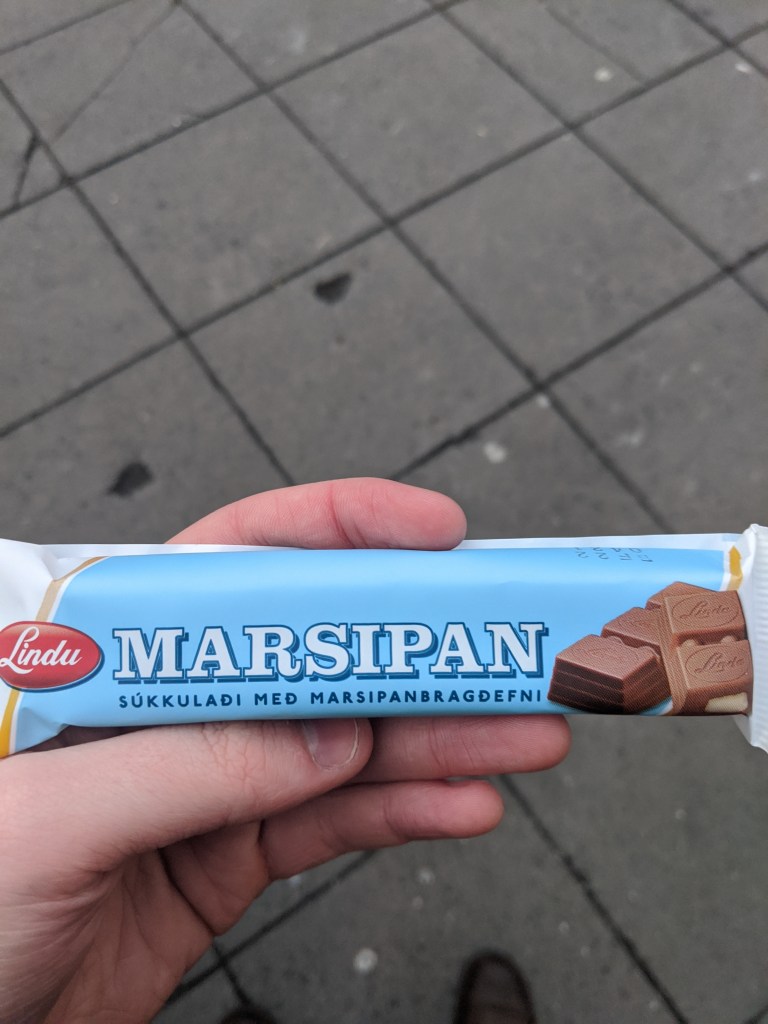
For food that night we opted for something cheap and Icelandic- 101 Reykjavik Street Food – the place was cute, the food was lovely and the service fast, the server himself (although we didn’t get his name) was so charming and had a nice chat with all the guests, even handing out free candy bars for dessert to everyone inside. A truly memorable experience and very reasonably priced.
Following that, at the recommendation of our snorkel instructor, we went to a more local and more authentic feeling spa: Vesturbaejarlaug. Temperatures around forty degrees, a steam room, a sauna- it was busy, full of kids, parents, elderly- it seemed like the real social epicentre of the city. If the locals relax here every night, it made sense as to how they survived the cold winters. At £6.00 pp it was worth it whether you’ve been to the Blue Lagoon or not- but if you can’t afford the full tourist attraction, this place has the same effect for sure!
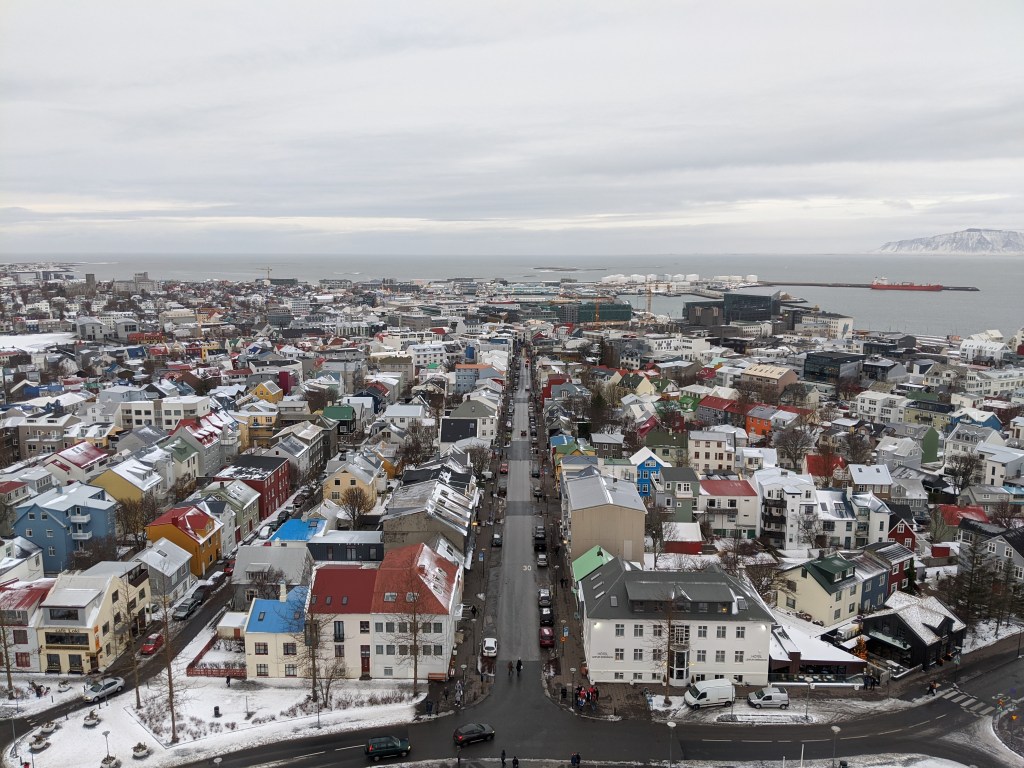
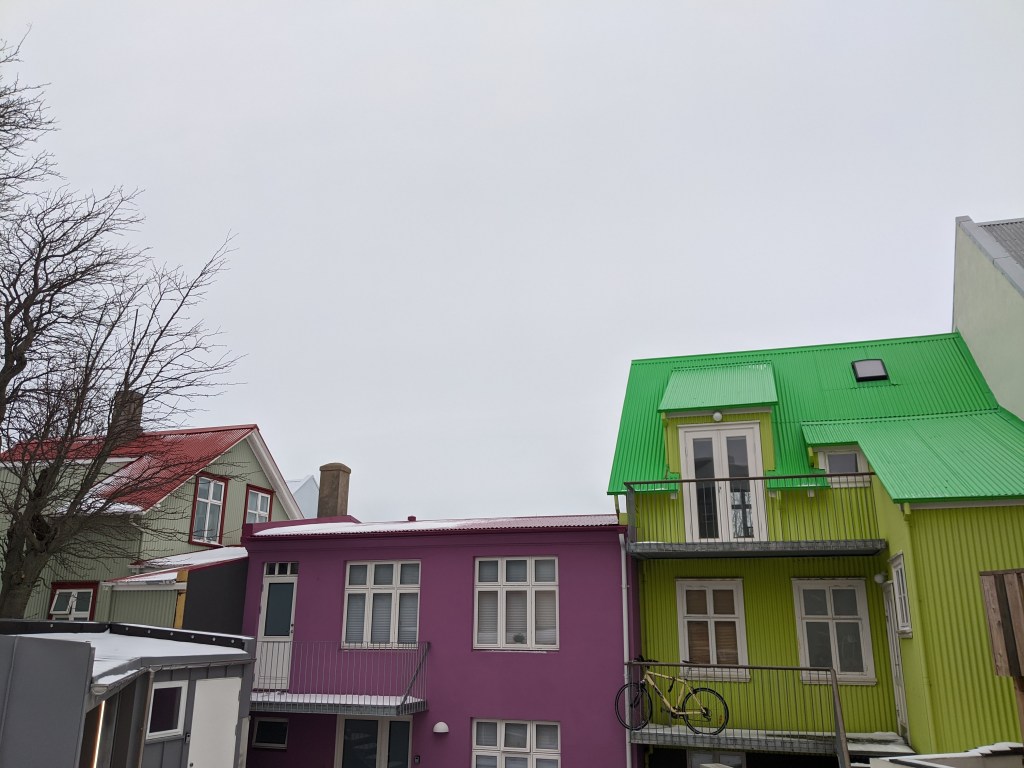
- Cathedral viewpoint: (eq. £6.00pp) we went up in the lift for the equivalent price of £6.00 each. The symmetry and colour of the roofs of the city from above were worth the cost alone. You could see the mountains in the distance. too.
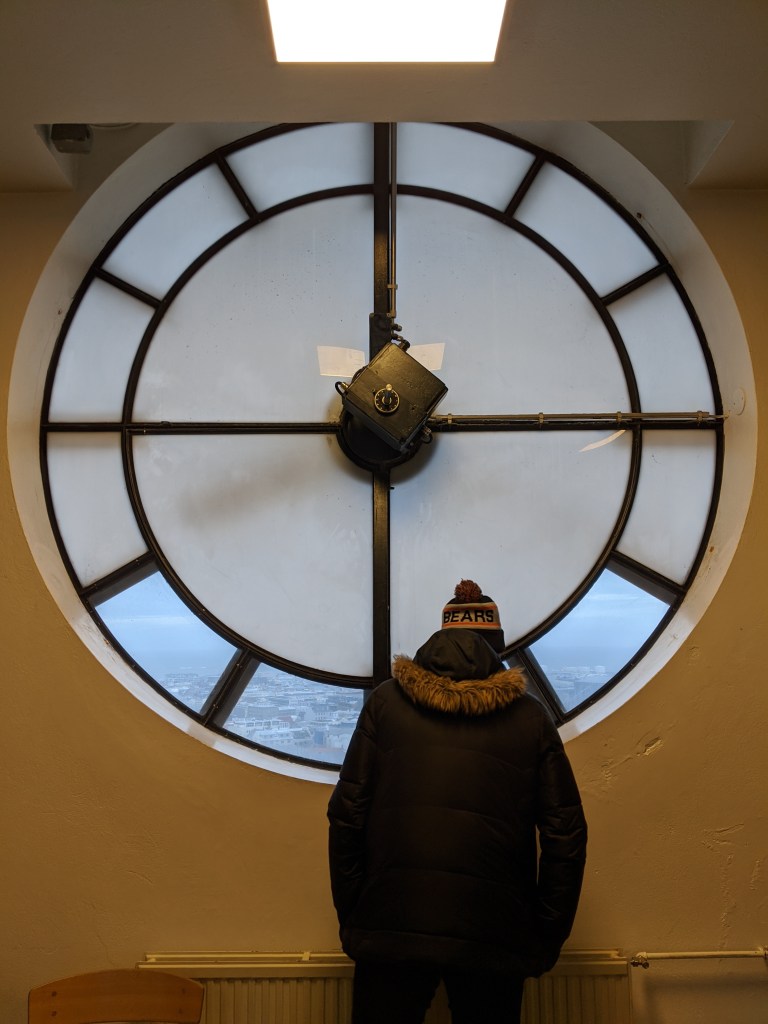
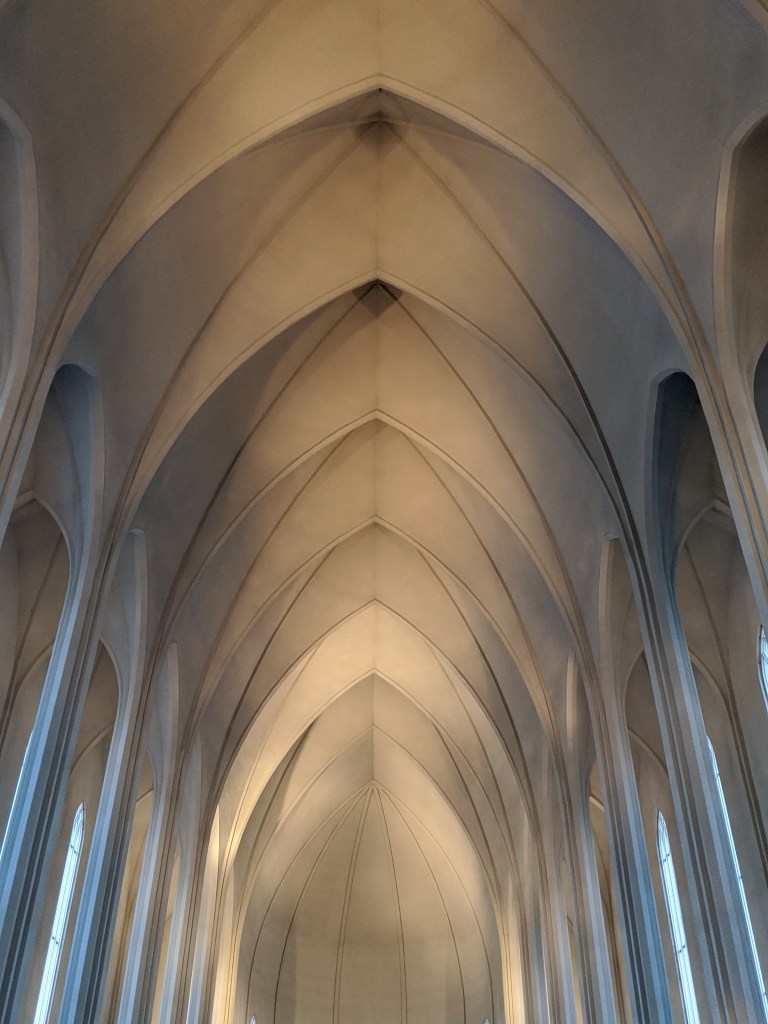
- Hallgrimskirkja: (free) inside the main body of the cathedral was some spectacular and aesthetically pleasing architecture- it was free to get into this area.
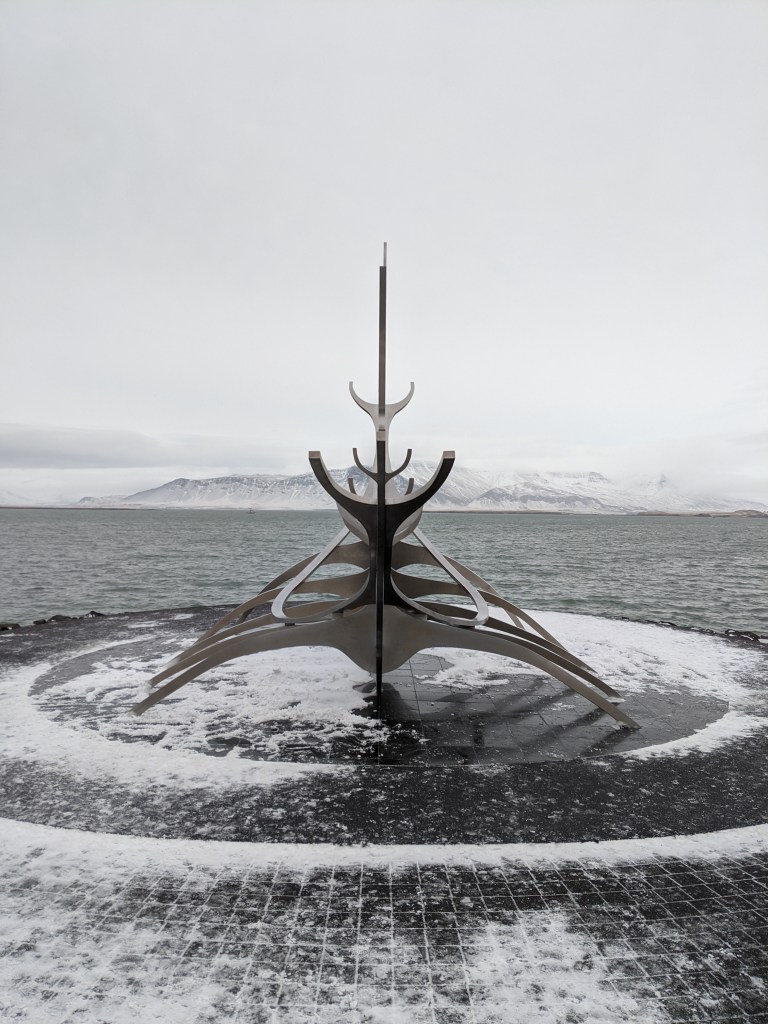
- Sun Voyager sculpture: (free) a slippery floor surrounding it, it was incredible to see a bit of ancient history expressed in such modern artistic fashion and not at all far from the city centre.
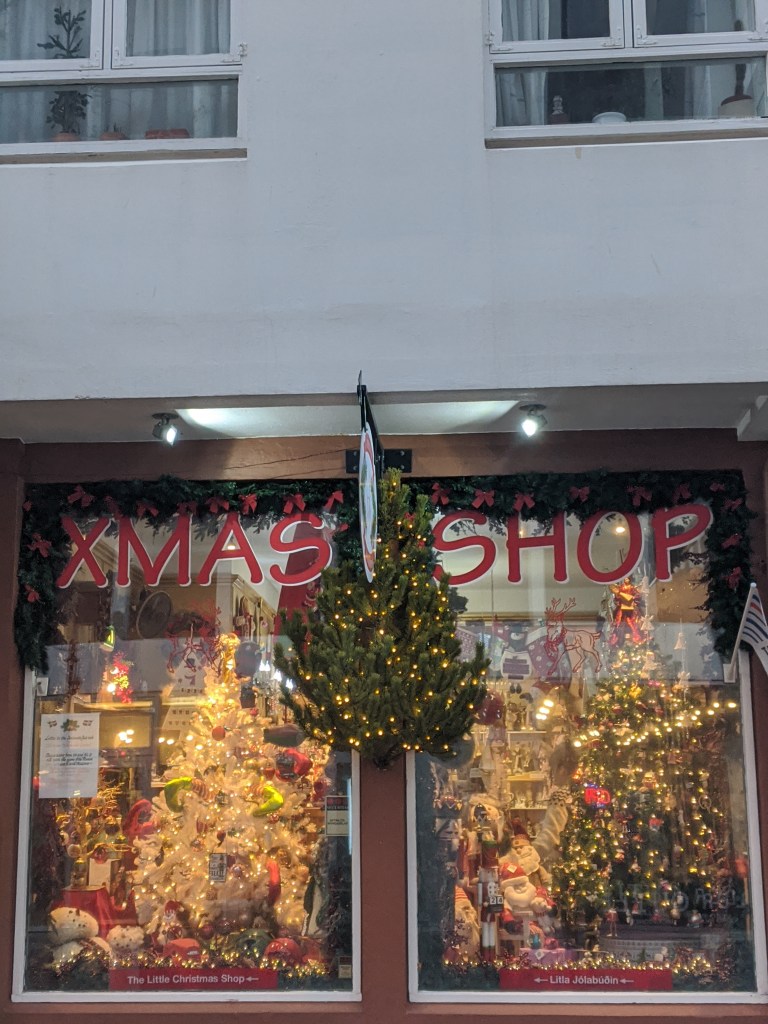
- The shops: (free) from a book shop founded in the 1800’s (where we purchased our own copy of Independent People by Halldor Laxness), to shops dedicated solely to Christmas and of course reams of Icelandic wool shops, there were so many quaint and unique shops to explore all afternoon.
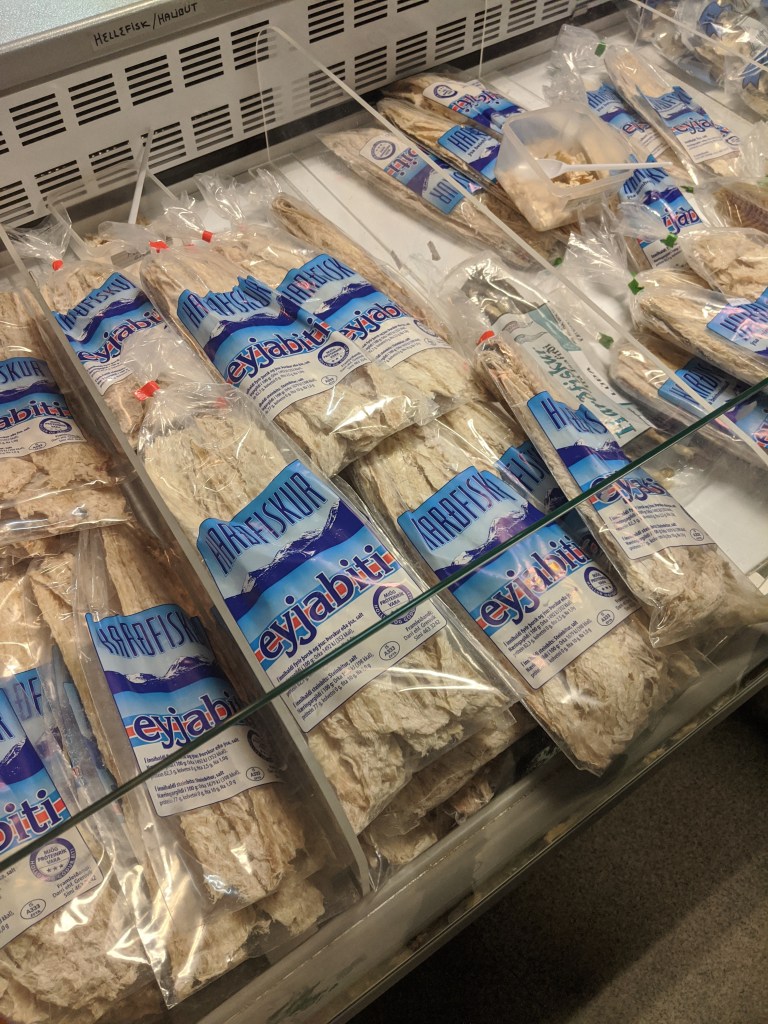
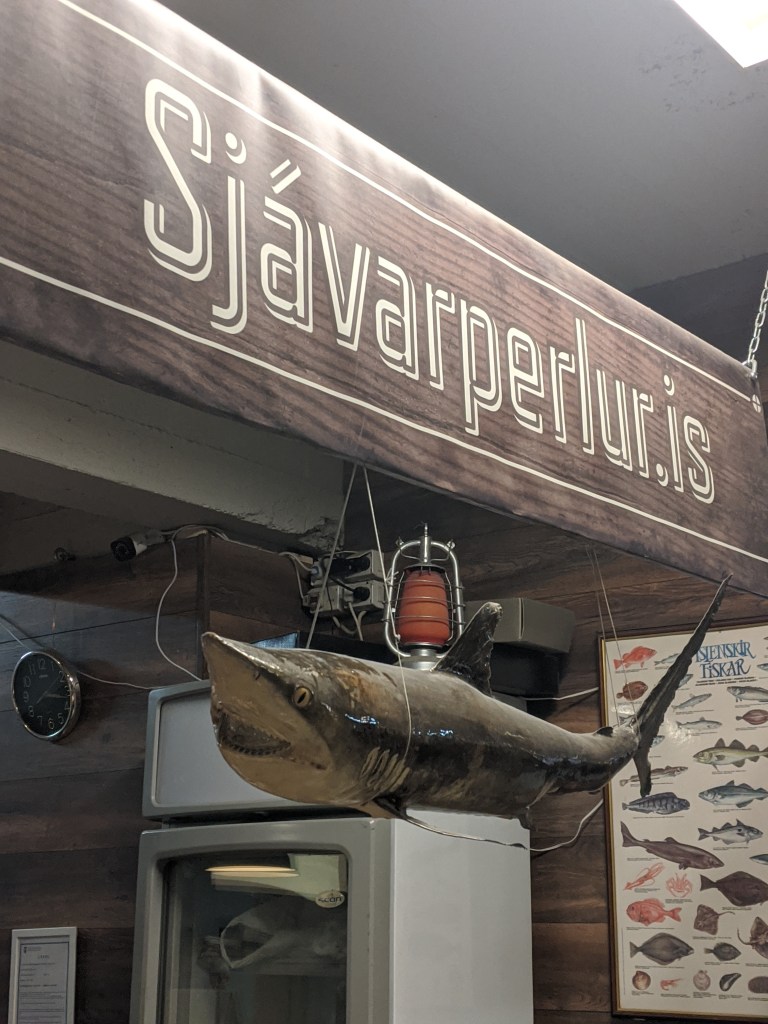
- Flea market: (free) on Saturday mornings, the Flea Market is open to visitors and is full of second-hand (but still pretty expensive) clothes, but most importantly you have the opportunity to try the famous shark meat Hakarl and fish jerky free of charge. Shark meat is an acquired taste to say the least and fish jerky isn’t necessarily something you’d choose on the menu, but it was an experience worth having- and who knows, you may love it!
- National Museum of Iceland: (£12 pp – although it’s 50% cheaper for students and free for U18s) this museum was full of Viking history on its ground floor- we read a number of reviews saying it was a confusing layout but we didn’t find it such. There were lots of museums for us to choose from in Reykjavik but this was really interesting. The first floor showed a more general history of Iceland and had some games which we enjoyed playing. Not to mention the Skyr lemon cheesecake we enjoyed at the cafe. It was a bit of a walk from our hostel and of course when we ventured it was an absolute blizzard- but it was worth the trip.
- Lighthouse: (free) a little drive away but nice to see out to sea.
Reykjavik was such a glorious city. We pondered how it would be to travel Iceland in the summer with its endless days.
SUMMARY:
with cost breakdowns.
We hope you’ve found this a useful guide for a road-trip here and not just off putting! Speaking with others, we’d suggest car (although perhaps a more suitable type) is the best possible way to travel the country- it gives you the freedom and flexibility that we found essential. Also, no planned trip can chase the Northern Lights better than you can if you don’t have much time. Winter was an incredible time of year to visit and it allowed us to experience the country in all its decadent glory. The people were reserved, polite and welcoming – much the opposite to the country they occupied.
In terms of gear, as you’ll see if you read our other blogs, we are the experts in having none of the gear, no idea, but soldiering on regardless. We both wore boots the entire time (Doc Martens/Vagabond) and they lasted fine. We had about 4 layers each, good quality gloves, scarves, hats etc. just your usual very cold English winter day kind of stuff really. The weather can be frightful so really do take a lot of layers and of course a waterproof for the inevitable showers. In summer, the weather is much milder. We don’t really believe in splashing out on any fancy gear but thermals would be nice if you can afford them/already have some for sure!
Now, it must be said, we did it in the car on the cheap successfully BUT whether we’d recommend it is another question. There were times of genuine fear in that little car, so really think about how much stress you want on holiday and how confident you are driving in unnerving conditions! If you can afford to hire a better car in the winter, do and if you can’t maybe wait until you’ve saved a bit more money to travel there, if you aren’t a comfortable being uncomfortable!
Price summary (approx): accommodation total £120 pp 7 nights; petrol total £60 pp; car rental £100 pp inc. insurance from Iceland Car Rental; flights £45 pp; excursions and activities £230 pp approx. (with the activities listed); food (we ate a lot of snacks from home) £100 pp –> approx total pp = £550.
Value for money was surprisingly great really, with the car so much of the activity was simply looking, taking things in- food was the main expense but we knew that in advance so took a lot of snacks in our hold luggage. Parking was free generally too!
Any questions, please pop us a message and please enjoy our other, more succinct blogs on our trip to Iceland!
Thanks for reading.
 Places We Roam